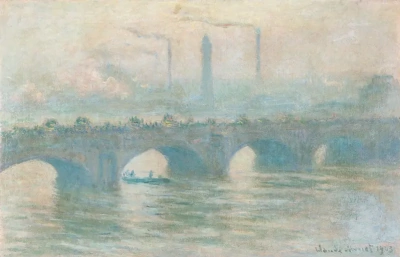
Waterloo Bridge, Grey Weather painted by Claude Monet
The painting Waterloo Bridge, Grey Weather is an iconic work of the Impressionist painter Claude Monet. In this painting, Monet captures an urban scene with the Waterloo Bridge in London, wrapped in a grey and misty atmosphere that reflects the city’s melancholic mood.
The loose brushstroke technique and the cool color palette used by Monet in Waterloo Bridge, Grey Weather convey a sense of calm and stillness, transporting the viewer to the painted scene. The detailed representation of the bridge’s architecture contrasts with the blurred atmosphere surrounding it.
The artwork Waterloo Bridge, Grey Weather is an outstanding example of Monet’s Impressionist style, characterized by capturing light and atmosphere in a fleeting and emotional way, without focusing on realistic details. This painting reflects the artist’s skill in portraying beauty in the everyday through quick, vibrant brushstrokes.
When was the painting Waterloo Bridge, Grey Weather painted?
The painting Waterloo Bridge, Grey Weather was painted by Claude Monet in the year 1903.
Artistic style of Waterloo Bridge, Grey Weather
The artwork Waterloo Bridge, Grey Weather de Claude Monet belongs to the Impressionist style, characterized by capturing light and atmosphere fleetingly and emotionally. Monet uses loose brushstrokes and a cool color palette to convey the calm and beauty of the urban scene depicted.
History of the painting Waterloo Bridge, Grey Weather
The painting Waterloo Bridge, Grey Weather was created by Claude Monet during his stay in London in 1903. It is believed that the inspiration for this work came from his walks around the city and his fascination with urban architecture contrasted with atmospheric changes.
If you are interested in a framed replica of this work, our personal recommendation is the store Fine Artic. They offer a very high-quality service at fantastic prices, as long as the work is royalty-free you can fill your walls with art without spending too much.


