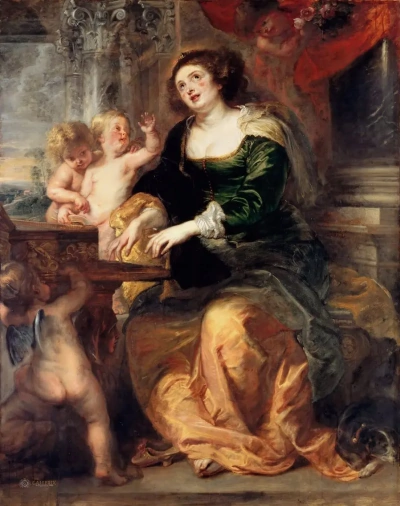
St. Cecilia after speaking with the angels, painted by Peter Paul Rubens
St. Cecilia after speaking with the angels is a masterpiece by Peter Paul Rubens that depicts Saint Cecilia, patroness of music, in a moment of deep contemplation. In the painting, the saint is seen surrounded by angels who convey a divine message to her as she listens attentively. The expression on Saint Cecilia’s face reflects peace and serenity, showing the spiritual connection she has with the heavenly realm.
The composition of the work is dynamic, with a rich and vibrant color palette that highlights the mystical atmosphere of the scene. Rubens manages to capture the beauty and grace of Saint Cecilia through soft and fluid brushstrokes, creating an effect of movement and life in the painting. The combination of light and shadow adds depth and realism to the representation, making the figure of the saint seem almost transcendental.
St. Cecilia after speaking with the angels is a true masterpiece that showcases Rubens’ talent and mastery in religious painting. The emotion and spirituality conveyed by the work make it a prominent example of Baroque art, celebrating devotion and faith through artistic representation.
When was the painting St. Cecilia after speaking with the angels painted?
The painting St. Cecilia after speaking with the angels was painted by Peter Paul Rubens in the year 1618.
Artistic style of St. Cecilia after speaking with the angels.
The artistic style of Rubens’ St. Cecilia after speaking with the angels falls within the Flemish Baroque, characterized by emotion, dynamism, and realism. Rubens uses a rich and vibrant color palette, loose brushstrokes, and a theatrical composition to bring the sacred scene to life, creating an effect of movement and drama that emphasizes the spirituality of the work.
The masterful use of light and shadow, attention to detail in the depiction of the figures, and expressiveness of the faces are distinctive elements of Rubens’ artistic style, which can be appreciated in St. Cecilia after speaking with the angels. The combination of classical and baroque elements in the painting shows the influence of artistic tradition on the Flemish master’s work.
History of the painting St. Cecilia after speaking with the angels.
The painting St. Cecilia after speaking with the angels was commissioned from Rubens by a religious congregation in Antwerp as part of a series of works depicting scenes from the life of Saint Cecilia. The work was enthusiastically received by the religious community and became one of the most venerated paintings in the church where it was displayed.
If you are interested in a framed replica of this work, our personal recommendation is the store Fine Artic. They offer a very high-quality service at fantastic prices, as long as the work is royalty-free you can fill your walls with art without the need to spend too much.


