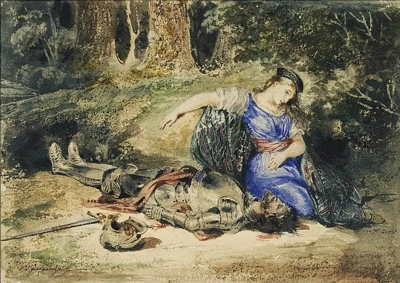
Lara Death by Eugene Delacroix
Lara Death is an iconic painting by the famous French artist Eugene Delacroix that depicts a inconsolable woman mourning the death of her beloved. The scene is full of emotion and drama, capturing an intense moment of pain and despair.
The use of dark and somber colors, along with energetic and expressive brushstrokes, adds depth and emotion to the work. The composition and lighting reinforce the feeling of sadness and loss, creating a melancholic and moving atmosphere.
The figure of Lara, with her heartbreaking gesture and lost gaze, becomes the main focus of the painting, conveying an emotional intensity that resonates with the viewer and invites reflection on pain and mortality.
When was the painting “Lara Death” created?
The painting “Lara Death” by Eugene Delacroix was created in the year 1826.
Artistic style of “Lara Death”
The artistic style of “Lara Death” reflects the influence of Romanticism, characterized by an emphasis on emotion, imagination, and personal expression. Delacroix uses a rich and contrasting color palette, as well as vigorous and dynamic brushstrokes that accentuate the drama of the scene.
The choice to represent a moment of intense emotion and the detailed treatment of the main figure demonstrate the artist’s skill in capturing the essence of human tragedy and conveying it powerfully through his work.
History of the painting “Lara Death”
The creation of “Lara Death” was inspired by a personal event in Delacroix’s life, who experienced the loss of a loved one at that time. This painting has become one of the artist’s most iconic works, recognized for its emotional intensity and lasting impact on the art world.
If you are interested in a framed replica of this work, our personal recommendation is the store Fine Artic. They offer a very high-quality service at fantastic prices, as long as the work is free of rights you can fill your walls with art without having to spend too much.


