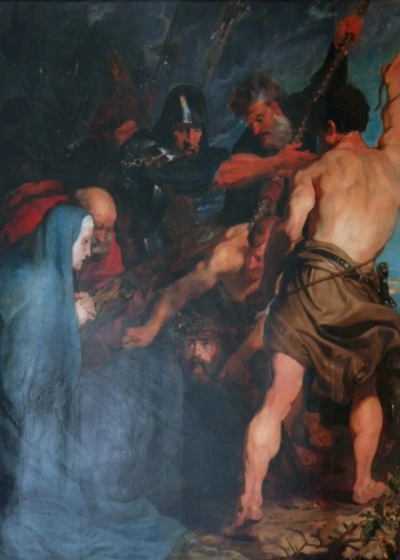
The painting “Christ Falls Under the Cross” by Anthony van Dyck
Christ Falls Under the Cross is a work created by the Flemish painter Anthony van Dyck, depicting one of the most dramatic moments of the Passion of Christ. In the scene, Christ falls to the ground under the weight of the cross he carries on his shoulders, surrounded by figures expressing compassion, pain, and anguish.
Van Dyck manages to convey the intensity of the scene through the expressiveness of the faces and the positioning of the characters, using a palette of somber and contrasting colors that reinforce the drama of the situation. The composition and the treatment of light and shadows contribute to creating an atmosphere of intense emotion.
This masterpiece of Flemish Baroque art has been admired throughout the centuries for its powerful depiction of a crucial moment in Christian tradition, inviting reflection and contemplation of the passion and suffering of Christ.
When was the painting “Christ Falls Under the Cross” created?
The painting “Christ Falls Under the Cross” by Anthony van Dyck was painted in 1631.
Artistic style of “Christ Falls Under the Cross”
The painting “Christ Falls Under the Cross” by Van Dyck exhibits a Baroque artistic style characterized by its drama, expressiveness, and masterful use of chiaroscuro. The intensity of emotions and the realism of the figures reflect the influence of Caravaggio and the artist’s skill in capturing the moment with exceptional precision and emotion.
The dynamic composition and careful lighting reveal Van Dyck’s mastery in conveying the depth of the subject and the emotional impact on the viewer, creating an intimate connection with the religious narrative and the spirituality of the depicted moment.
History of the painting “Christ Falls Under the Cross”
The painting “Christ Falls Under the Cross” by Anthony van Dyck was created at a time of deep religious devotion in Europe, where the depiction of biblical scenes was used as a tool for catechesis and spirituality. The work was highly welcomed by society at the time, being considered a piece of great artistic and religious value.
The striking depiction of Christ falling under the cross resonated with the public of the era, stirring intense emotions and deep reflections on the passion and suffering of Christ. The work became a symbol of faith and devotion, transcending its artistic value to convey a universal spiritual and religious message.
If you are interested in a framed replica of this work, our personal recommendation is the store Fine Artic. They offer a very high-quality service at fantastic prices, and as long as the work is copyright-free, you can fill your walls with art without the need to spend too much.


