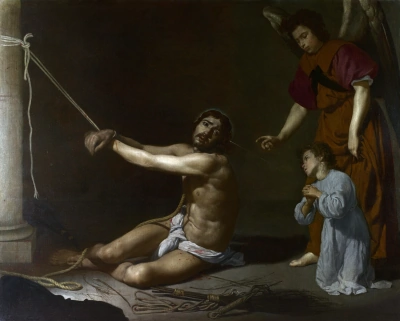
Works of Diego Velázquez
Diego Velázquez was one of the most important painters of the Spanish Golden Age. Born in Seville in 1599, Velázquez is known for his mastery in the handling of light and shadow in his works, as well as for his ability to capture expression and realism in his portraits. His paintings reflect a deep psychological introspection and a technical mastery that makes him a benchmark of Baroque art.
Among his most famous works is “Las Meninas,” a portrait of the Spanish royal family that has been the subject of numerous studies and analyses due to its complexity and pictorial richness. Other notable works include “The Surrender of Breda,” “The Jester Calabacillas,” and “The Rokeby Venus.” Velázquez died in Madrid in 1660, leaving an artistic legacy that has been admired and studied over the centuries.
Artistic style and technique of Diego Velázquez
Diego Velázquez’s artistic style is characterized by its realism, mastery in the treatment of light and color, and his ability to capture human expression naturally and authentically. His portraits are famous for their truthfulness and their capacity to reflect the personality and character of their subjects. Regarding his technique, Velázquez was a true virtuoso in the use of oil paint, creating effects of transparency and luminosity that have been admired by generations of artists.
Velázquez also innovated in the genre of historical painting, introducing realism and visual narrative that would influence the work of many later artists. His ability to combine the real and the ideal in his works makes him an undisputed reference of Spanish Baroque art.
Life and legacy of Diego Velázquez
Diego Velázquez was born in Seville in 1599 and began his artistic career as an apprentice in Francisco Pacheco’s workshop. He soon stood out for his talent and was appointed court painter to King Philip IV in Madrid, where he spent most of his career. Velázquez was a prolific painter, producing numerous portraits of the royal family, as well as works with religious and mythological themes.
His work has been the subject of numerous interpretations and studies, and has influenced many later artists, such as Edouard Manet and Francis Bacon. Velázquez died in 1660, leaving an artistic legacy that continues to be a source of inspiration for artists and art lovers today.