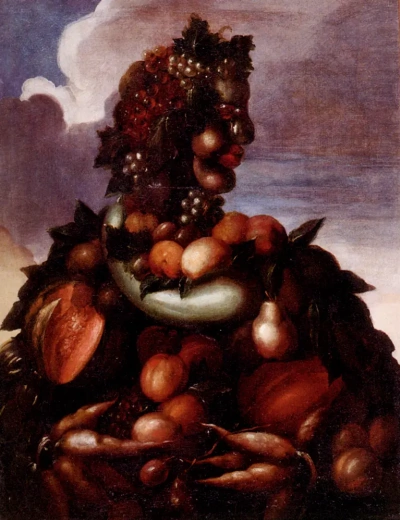
Works of Giuseppe Arcimboldo
Giuseppe Arcimboldo was a 16th-century Italian painter known for his portrait paintings in which he used fruits, flowers, vegetables, animals, and objects to create human figures. His works combined nature with creativity, reflecting the artist’s fascination with the connection between man and the natural world.
The paintings of Arcimboldo challenge the traditional perception of painting by presenting unusual and surreal compositions that invite the viewer to look closer and discover the diversity of elements used in each work. Through his creations, the artist managed to capture the essence of nature and humanity in a unique and original way.
Artistic style and technique of Giuseppe Arcimboldo
The artistic style of Giuseppe Arcimboldo is characterized by its focus on representing nature in an imaginative and playful manner. He used natural elements to create portraits that defied the artistic conventions of the time, experimenting with form and color to achieve surprising effects.
The technique of Arcimboldo involved careful selection and composition of the elements used in each painting, ingeniously combining them to create recognizable human figures. His skill in merging nature with human anatomy highlighted his artistic mastery and originality as a painter.
Life and legacy of Giuseppe Arcimboldo
Giuseppe Arcimboldo was born in Milan in 1526 and served as a court painter for the Habsburgs in Vienna and Prague. His work has influenced later artists and his legacy endures in art history as a unique exponent of creativity and imagination in painting.
Arcimboldo is remembered for his innovation in representing nature and his ability to transform simple elements into complex and surprising artworks. His unique approach and originality have established him as one of the most important artists of the late Renaissance, leaving a lasting legacy in art history.