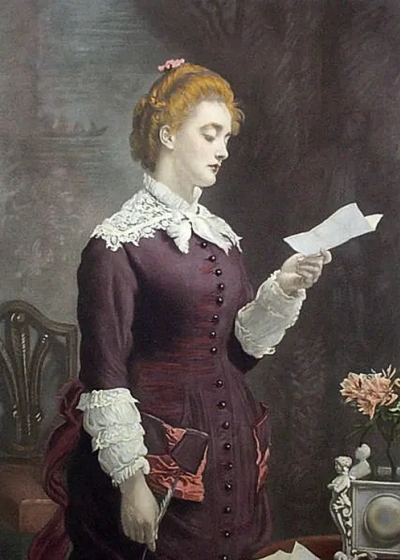
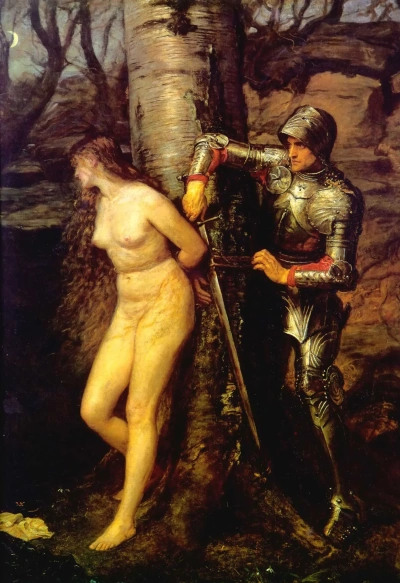
Works of John Everett Millais
John Everett Millais was an influential 19th-century British painter, a prominent member of the Pre-Raphaelite Brotherhood. His works are characterized by their detailed and realistic style, as well as careful attention to light and composition. Millais tackled a wide variety of subjects in his work, from portraits to genre paintings and landscapes.
Among his most famous works are “Ophelia,” “The Flooded River,” and “Christ in the House of His Parents.” These paintings demonstrate Millais’s technical skill in capturing emotion and beauty in every detail, becoming iconic artworks still admired to this day.
Artistic Style and Technique of John Everett Millais
Millais’s artistic style is characterized by his focus on precision and realism, inspired by the Pre-Raphaelite ideals of returning to techniques and models prior to the Renaissance. His meticulous technique and mastery of color and light allowed him to create works that impressed with their beauty and emotion.
The uniqueness of his technique lies in the meticulous details and fluid brushstrokes that create a sense of movement and life in his paintings. Additionally, his ability to capture the luminosity and nuances of nature made him stand out as one of the great masters of painting in his time.
Life and Legacy of John Everett Millais
John Everett Millais was born in Southampton, United Kingdom, in 1829 and showed exceptional talent for painting from a young age. He was one of the founders of the Pre-Raphaelite Brotherhood, a group of artists seeking to break with established artistic conventions and create works more faithful to nature.
His legacy endures to this day, recognized as one of the most influential painters of his era. His work has inspired subsequent generations of artists and his impact on art history is undeniable. John Everett Millais died in 1896, leaving a legacy of beauty and creativity that is still admired worldwide.