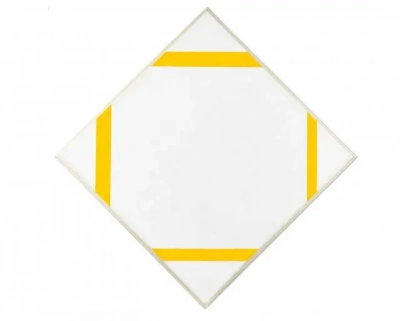
Works of Piet Mondrian
The paintings of Piet Mondrian are characterized by their abstract and geometric style, where he uses simple shapes like squares, rectangles, and horizontal and vertical lines. His color palette is mostly limited to white, black, gray, and primary colors such as red, blue, and yellow, creating balanced and harmonious compositions.
Mondrian’s works reflect his interest in universal harmony and the search for balance between nature and abstraction. His paintings convey a sense of order, simplicity, and purity, capturing the essence of reality through abstract shapes and primary colors.
Artistic style and technique of Piet Mondrian
The artistic style of Piet Mondrian is characterized by its abstract and geometric approach, where he seeks to represent universal harmony through simple shapes and primary colors. His works reflect his belief in spirituality and the connection between art and nature.
Mondrian’s technique is based on simplifying shapes and colors, using straight lines and precise angles to create balanced and harmonious compositions. His focus on abstraction and geometry has made him one of the pioneers of abstract art and a reference in the history of modern art.
Life and legacy of Piet Mondrian
Piet Mondrian was born in the Netherlands in 1872 and developed his artistic career in Paris and New York, where he was part of artistic movements such as Neoplasticism and De Stijl. His legacy has remained alive over the years, influencing contemporary artists and the concept of abstract art.
Mondrian died in 1944, leaving behind a vast artistic legacy that continues to inspire artists and viewers worldwide. His unique style and his vision of art as an expression of universal harmony have made him an iconic figure in the history of modern art.