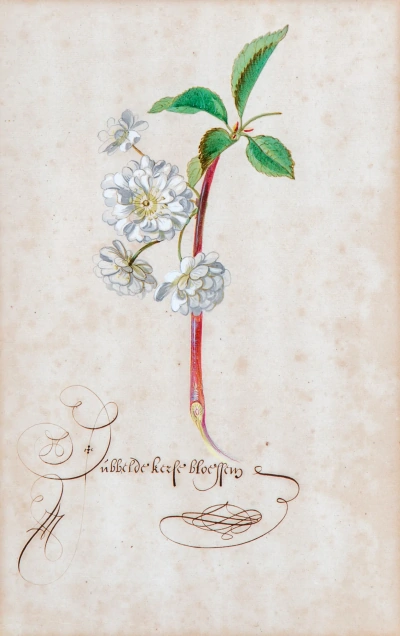
Blooming Branch by Balthasar van der Ast
Balthasar van der Ast was a Dutch painter known for his detailed still lifes that incorporated elements such as flowers, fruits, and seashells. Within this theme, Blooming Branch stands as a significant work that captures the essence of his talent for representing natural beauty with great meticulousness.
This painting stands out for its vigorous detail and van der Ast’s skill in capturing texture and light realistically. The depiction of the blooming branch radiates ephemeral beauty, evoking fragrances and spring freshness with unparalleled aesthetic precision.
Through the use of vivid colors and a balanced composition, Van der Ast not only achieves an aesthetically pleasing piece but also communicates the delicate balance of nature, inviting the viewer to reflect on the transience of life and the perennity of beauty.
When was the painting Blooming Branch created?
The work Blooming Branch was painted in the 17th century, a period that marked the peak of Dutch still life painting.
Artistic style of Blooming Branch
The painting Blooming Branch by Balthasar van der Ast is an outstanding representation of Dutch Baroque style in still life painting. The attention to detail, characteristic of Van der Ast’s work, is deeply evident in this painting, where every element seems to come alive.
The use of light and shadow plays a crucial role in creating a sense of depth and three-dimensionality, allowing each flower and leaf to stand out within a rich and balanced composition. The contrast between the vivid colors and the dark background intensifies the focus on the blooming branch, a typical Baroque device used to direct the viewer’s attention.
Through this work, Van der Ast manages to convey not only the aesthetic beauty of nature but also a sense of wonder and contemplation. The meticulous execution and mastery in capturing natural reality highlight Blooming Branch as an outstanding example of Baroque art and still life painting.
History of the painting Blooming Branch
The creation of Blooming Branch by Balthasar van der Ast fits within a historical context where still life painting experienced a remarkable rise in the Netherlands. This genre offered artists the freedom to explore minute details and symbolic meanings, many of which revolved around beauty, transience, and the life cycle.
Regarding its subsequent history, although no specific anecdotes about this work are recorded, it is known that Van der Ast’s paintings, including Blooming Branch, captured the attention of collectors and patrons, contributing to his reputation and the dissemination of the still life genre. His work has not only been celebrated by critics over time but has also influenced generations of artists, highlighting the importance of carefully observing the natural world and its complexity.
If you are interested in a framed replica of this work, our personal recommendation is the store Fine Artic. They offer a very high-quality service at fantastic prices; as long as the work is copyright-free, you can fill your walls with art without having to spend too much.


