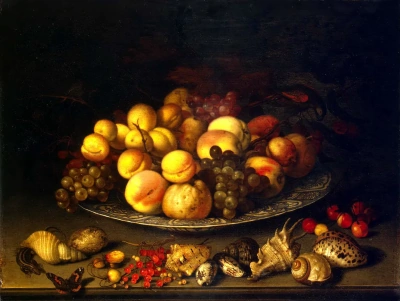
The painting Plate with fruits and shells by Balthasar van der Ast
El painting Plate with fruits and shells, work by the renowned painter Balthasar van der Ast, is one of the most fascinating representations of Baroque art. This piece encapsulates the artist’s skill in capturing the intrinsic beauty of everyday objects, transforming them into a composition that transcends time and space. The meticulous attention to detail and the vibrant color palette stand out in this painting, inviting the viewer to deep contemplation.
The composition is characterized by its rich variety of fruits and sea shells, an arrangement that not only demonstrates van der Ast’s technical mastery over still life but also evokes the wealth and exoticism associated with the geographical discoveries of the time. Each element in the painting, from the soft textures of the fruits to the metallic shine of the shells, is painted with a precision that nearly reaches optical illusion.
The work Plate with fruits and shells invites reflection on the ephemeral nature of life and the permanence of beauty. Through this painting, van der Ast not only captures the visual splendor of his subject matter but also offers a meditation on the richness and diversity of the natural world.
When was the painting Plate with fruits and shells created?
The painting Plate with fruits and shells by Balthasar van der Ast was painted in the 17th century, a period that marked the height of Baroque art and the interest in still life.
Artistic style of Plate with fruits and shells
The artistic style of the painting Plate with fruits and shells is deeply representative of Baroque art, with emphasis on realism, attention to detail, and the use of vivid colors. Balthasar van der Ast was able to convey not only the external beauty of his subject but also the sense of abundance and diversity that defines the Baroque. The work stands out for its balanced composition despite the variety of elements depicted.
The technique embedded in the work reveals an exceptional mastery of light and shadow, key elements of Baroque that provide the painting with a unique atmosphere and an almost three-dimensional depth. This handling of lighting intensifies the texture and color of each object, creating a realism effect rarely captured with such precision.
Moreover, the intentional use of space and perspective adds an almost tactile quality to the work, inviting the viewer to visually explore every detail of the painting. Taken as a whole, the work Plate with fruits and shells is a masterful display of the Baroque style, characterized by its complexity, dynamism, and emotional expressiveness.
History of the painting Plate with fruits and shells
The creation of the painting Plate with fruits and shells is set within a historical context marked by fascination with still life in 17th-century art. This interest was not merely aesthetic but also reflected society’s desire at the time to capture and understand the diversity of the natural world being discovered through maritime expeditions. Van der Ast’s work, in this sense, becomes a testimony to the human desire to preserve the ephemeral beauty of nature.
The influence of the painting transcends its time, inspiring future generations of artists to explore still life as a means of examining the relationship between man and nature. Its ability to capture the essence of life through inanimate objects speaks to a profound understanding of the human condition and the constant search for beauty and meaning in the world around us. Over the years, Plate with fruits and shells it has been celebrated not only for its artistic mastery but also for its cultural and philosophical impact.
If you are interested in a framed replica of this work, our personal recommendation is the store of Fine Artic. They offer a very high-quality service at fantastic prices, as long as the work is royalty-free you can fill your walls with art without spending too much.


