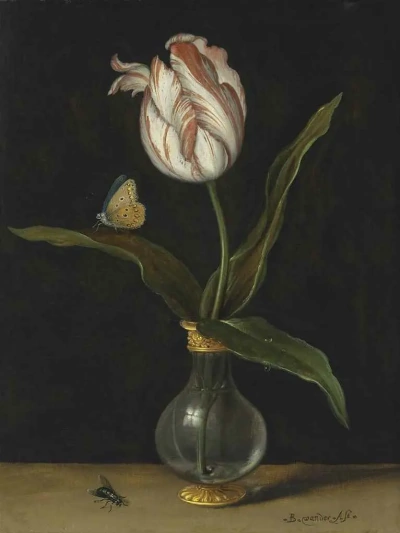
Still Life of Tulips by Balthasar van der Ast
El painting Still Life of Tulips is an exceptional work of art created by the Dutch painter Balthasar van der Ast. This work is widely recognized for its detailed depiction of nature, especially tulips, which were highly prized at the time. The meticulous composition and use of color highlight van der Ast’s skill in capturing the ephemeral beauty of flowers.
The artwork is characterized by its realism and attention to detail. Each flower, insect, and drop of dew is painted with great precision, conveying the fragility and intrinsic beauty of its subject. Light plays a crucial role, bringing life and dimension to every element of the painting.
Moreover, the Still Life of Tulips reflects the 17th-century society’s interest in botany and the collecting of exotic plants, serving as a historical document of the era. The work is not only a feast for the eyes but also a mirror of the human desire to understand and possess the natural beauty surrounding them.
When was the painting Still Life of Tulips painted?
The painting Still Life of Tulips was painted in the 17th century, although the exact year of its creation cannot be specified.
Artistic style of Still Life of Tulips
The style of the Still Life of Tulips is deeply rooted in the tradition of the Dutch still life of the 17th century. This period was characterized by a great interest in detailing everyday objects with astonishing realism, reflecting not only the artist’s technical skill but also a profound symbolism hidden in the elements depicted.
Balthasar van der Ast was a master at combining natural beauty with rich symbolism, employing elements such as flowers and insects to convey messages about the brevity of life and the inevitability of death, common themes in the art of the time. His often complex compositions invited reflection and visual delight.
The use of color and light in the Still Life of Tulips are particularly notable, with van der Ast applying lighting techniques that enhance the texture and form of each object, creating an almost tangible atmosphere. These elements contribute to the immersive visual and emotional experience offered by the painting, demonstrating the artist’s mastery in the still life genre.
History of the painting Still Life of Tulips
The creation of the Still Life of Tulips by Balthasar van der Ast coincides with a period of fascination and obsession with tulips in the Netherlands, known as tulip mania. This socioeconomic phenomenon, in which tulip bulbs reached exorbitant prices, reflects the cultural and economic context in which the artist developed his work.
Although no specific anecdotes are known about the painting’s creation, its existence is a testament to van der Ast’s ingenuity and sensitivity to his surroundings, as well as his ability to capture and immortalize the ephemeral beauty of flowers. The influence of the painting and its relevance endure to this day, serving as a reminder of tulip mania and as an emblematic work of 17th-century Dutch art.
If you are interested in a framed replica of this work, our personal recommendation is the store Fine Artic. They offer very high-quality service at fantastic prices; as long as the artwork is copyright-free, you can fill your walls with art without spending too much.


