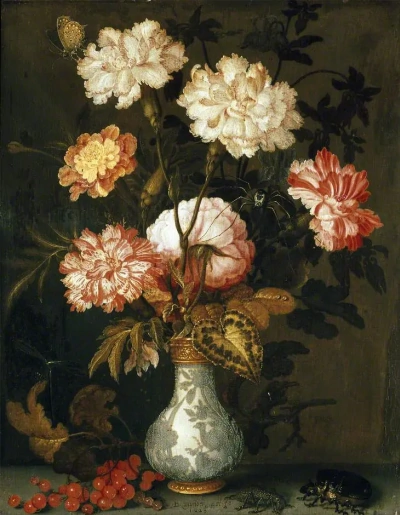
Vase with flowers, beetle, and red currant by Balthasar van der Ast
The painting “Vase with flowers, beetle, and red currant”, is a masterpiece painted by the talented Balthasar van der Ast. This painting captures a vibrant composition and detailed vase filled with lush flowers, accompanied by a beetle and red currants that add a touch of life and color. Van der Ast is known for his skill in recreating texture and detail in every element of his works.
This painting stands out for its richness of detail and the precision in the depiction of flowers and fruits, reflecting the artist’s interest in nature and its fleeting beauty. The composition of the painting demonstrates the artist’s mastery in creating a harmonious and balanced scene where each element has its precise place to shine.
The depiction of the beetle and red currants not only adds a touch of realism, but also symbolizes the fragility of life, a common theme in Van der Ast’s work. This painting is, without a doubt, an expression of the artist’s love and admiration for the natural world.
When was the painting Vase with flowers, beetle, and red currant painted?
The work “Vase with flowers, beetle, and red currant” was painted in the 17th century, although the exact year of its creation cannot be specified precisely.
Artistic style of Vase with flowers, beetle, and red currant.
The artistic style of the painting “Vase with flowers, beetle, and red currant” can be classified within Dutch Baroque, characteristic of the golden age of Dutch painting. Works from this period are distinguished by their detail and meticulous representation of nature, something that Balthasar van der Ast masterfully achieves with this painting.
The composition of the work shows mastery in the play of light and shadows, creating a visual effect that gives volume and depth to the flowers and objects represented. This aspect is crucial in Baroque art, where the illusion of three-dimensionality plays an important role in the viewer’s experience.
Finally, the choice of themes, representing both the ephemeral beauty of flowers and the presence of elements from everyday life, reflects the Baroque interest in exploring the duality between the divine and the earthly. This painting, in particular, invites reflection on the fleeting nature of life and the permanence of art.
History of the painting Vase with flowers, beetle, and red currant.
The history behind “Vase with flowers, beetle, and red currant” is both fascinating and enigmatic due to the lack of detailed records about the life of Balthasar van der Ast. However, it is known that the artist was deeply influenced by his brother-in-law Ambrosius Bosschaert , one of the first painters specializing in floral still lifes in the Netherlands, which undoubtedly played a crucial role in the development of his artistic style., uno de los primeros pintores especializados en bodegones florales en los Países Bajos, lo que indudablemente jugó un papel crucial en el desarrollo de su estilo artístico.
This painting is not only a testimony to Van der Ast’s talent but also to the popularity of the still life genre in the 17th century. The inclusion of elements such as the beetle and red currants was innovative and highlighted the artist’s ability to incorporate vanitas and memento mori symbols, reflecting the philosophical concerns of his time. Its impact, therefore, transcends visual beauty to immerse the viewer in a reflection on life and death.
If you are interested in a framed replica of this work, our personal recommendation is the shop of Fine Artic. They offer a very high-quality service at fantastic prices, and as long as the work is free of rights, you can fill your walls with art without spending too much.


