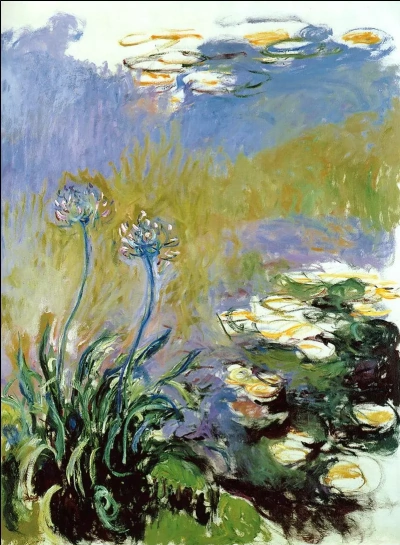
The painting ‘Agapanthus’ by Claude Monet
The painting ‘Agapanthus’ is a work by the renowned Impressionist painter Claude Monet, depicting a garden full of these beautiful deep blue flowers. Light and color blend masterfully in this work, conveying a sense of peace and harmony.
Monet captured in ‘Agapanthus’ the essence of nature in its purest state, with loose and vibrant brushstrokes that reflect the fleeting beauty of the flowers. The composition and interplay of light and shadow create a magical and ethereal atmosphere that invites the viewer to step into the depicted garden.
Monet’s technique and style in ‘Agapanthus’ are unmistakable, demonstrating his mastery in representing nature through subtle and lively brushstrokes. This work is a clear example of the artist’s genius and his ability to convey emotions through painting.
When was the painting ‘Agapanthus’ created?
Claude Monet’s painting ‘Agapanthus’ was painted in 1917.
‘Agapanthus’ Artistic Style
The artistic style of ‘Agapanthus’ falls within Impressionism, characterized by the subjective representation of light and color, capturing the atmosphere and essence of the moment. Monet used loose brushstrokes and vibrant colors to create a lively and dynamic work that invites the viewer to immerse themselves in the depicted landscape.
History of the painting ‘Agapanthus’
The creation of Claude Monet’s painting ‘Agapanthus’ was marked by his passion for nature and his desire to capture the fleeting beauty of the flowers in his garden. This work has become an icon of Impressionism and has impacted generations of viewers, conveying a sense of serenity and harmony.
If you are interested in a framed replica of this work, our personal recommendation is the store Fine Artic. They offer a very high-quality service at fantastic prices, and as long as the artwork is free of rights, you can fill your walls with art without having to spend too much.


