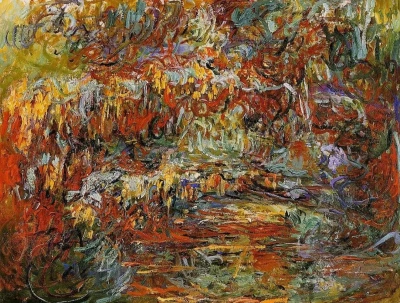
Japanese Bridge in Giverny painted by Claude Monet
Japanese Bridge in Giverny is one of Claude Monet’s most emblematic works, where the artist captured the beauty of the bridge located in his garden in Giverny, France. The painting reflects the influence of Japanese aesthetics in Monet’s work, with its elegant arch and the reflection of water lilies in the water.
The color palette used by Monet in Japanese Bridge in Giverny is characteristic of his impressionist style, with loose brushstrokes and vibrant colors that seek to capture the light and atmosphere of the place. The texture of the painting and the representation of nature are key elements of this work.
Japanese Bridge in Giverny is a display of Monet’s love for nature and his ability to portray it on canvas. The work conveys a sense of peace and harmony, inviting the viewer to immerse themselves in the beauty of nature through the artist’s eyes.
When was the painting Japanese Bridge in Giverny painted?
The painting Japanese Bridge in Giverny by Claude Monet was painted in the year 1899.
Artistic style of Japanese Bridge in Giverny
The artistic style of Japanese Bridge in Giverny falls within impressionism, characterized by loose brushstrokes, vibrant colors, and the capture of light and atmosphere in nature. The Japanese influence is reflected in the composition and harmony of the work, as well as in the poetic and emotional representation of nature.
History of the painting Japanese Bridge in Giverny
The creation of Japanese Bridge in Giverny was an inspiring process for Claude Monet, who found in his garden in Giverny the perfect muse for this masterpiece. The painting had a great impact on critics and the public, consolidating Monet’s reputation as one of the great masters of impressionism.
If you are interested in a framed replica of this work, our personal recommendation is the store Fine Artic. They offer a very high-quality service at fantastic prices, provided the work is rights-free you can fill your walls with art without needing to spend too much.


