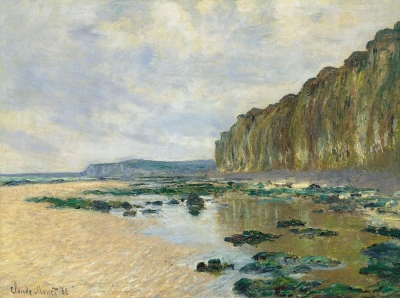
Low Tide at Varangeville painted by Claude Monet
Low Tide at Varangeville is a work of art painted by the famous French Impressionist Claude Monet. This painting portrays the beauty of the coast under soft and diffused light, capturing the tranquility of the marine landscape.
The composition of the work shows a harmonious combination of soft tones and light brushstrokes that reflect the influence of Impressionism in Monet’s work. The pastel color palette used by the artist helps create a serene and melancholic atmosphere.
The depiction of low tide at Varangeville invites us to delve into a moment of calm and reflection, where nature becomes the protagonist of the composition, conveying a sense of peace and harmony.
When was the painting Low Tide at Varangeville painted?
The painting Low Tide at Varangeville was painted by Claude Monet in the year 1885.
Artistic style of Low Tide at Varangeville
The work Low Tide at Varangeville by Claude Monet falls within the Impressionist movement, characterized by the representation of light and color in a subjective and fleeting way. Monet used loose brushstrokes and vibrant colors to capture the natural atmosphere of the marine landscape, creating a sense of movement and life in the work.
History of the painting Low Tide at Varangeville
The work Low Tide at Varangeville by Claude Monet was created during a period when the artist was exploring new techniques and themes in his work. This painting showcases Monet’s mastery in capturing the beauty of nature and reflects his deep connection with the marine landscape.
If you are interested in a framed replica of this work, our personal recommendation is the store Fine Artic. They offer a very high-quality service at fantastic prices, as long as the work is copyright-free you can fill your walls with art without having to spend too much.


