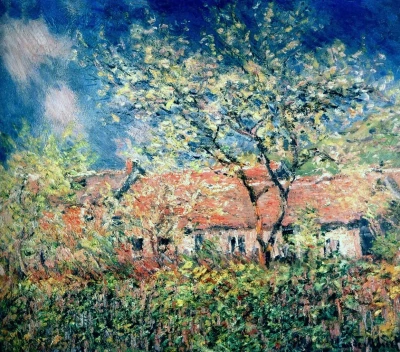
The painting Spring in Giverny by Claude Monet
Spring in Giverny is a masterpiece painted by the famous French artist Claude Monet. In this painting, Monet captures the beauty of spring in his garden at Giverny, showing an explosion of colors and light.
The vibrant tones of the flowers and the softness of the light create an atmosphere of serenity and harmony in the work. The reflections of colors in the water add depth and movement to the composition, transporting the viewer to a world of peace and natural beauty.
Spring in Giverny is a perfect example of Monet’s impressionist style, characterized by loose brushstrokes, bright colors, and the capture of light and atmosphere on the canvas. This work is a testament to Monet’s ability to depict the beauty of nature in its purest and most vibrant form.
When was the painting Spring in Giverny painted?
The painting Spring in Giverny by Claude Monet was painted in the year 1886.
Artistic style of Spring in Giverny
The artistic style of Spring in Giverny is predominantly impressionist, characterized by loose brushstrokes, vibrant colors, and a masterful capture of light and atmosphere.
History of the painting Spring in Giverny
The creation of Spring in Giverny was an inspiring process for Monet, who found in his garden at Giverny the perfect muse for this work. The striking beauty of spring in that place is reflected in every stroke of the painting, making it an ode to nature and the artist’s mastery.
The painting Spring in Giverny by Claude Monet has left a lasting legacy in art history, being recognized as one of the most representative works of impressionism and as an outstanding example of the talent and sensitivity of its creator.
If you are interested in a framed replica of this work, our personal recommendation is the store Fine Artic. They offer a very high-quality service at fantastic prices, and as long as the work is copyright-free, you can fill your walls with art without spending too much.


