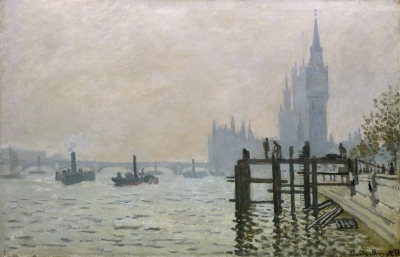
The Thames at Westminster painted by Claude Monet
The painting The Thames at Westminster by Claude Monet is an Impressionist work that depicts the River Thames as it passes through Westminster, London. In this painting, Monet captures the light and movement of the water in a unique way, using loose brushstrokes and vibrant colors.
The composition of the painting focuses on the reflection of light on the water and the buildings of Westminster, creating an ethereal and mysterious atmosphere. Monet manages to convey the feeling of being in front of a constantly changing landscape, capturing the fleeting beauty of the moment.
The use of color and light in The Thames at Westminster reflects Monet’s mastery of the Impressionist technique, highlighting his skill in depicting reality in a subjective and emotional way.
When was the painting The Thames at Westminster painted?
The painting The Thames at Westminster by Claude Monet was painted in the year 1871.
Artistic style of The Thames at Westminster
The artistic style of The Thames at Westminster is framed within Impressionism, characterized by the representation of light and color subjectively. Monet uses loose brushstrokes and vibrant colors to create a unique atmosphere and capture the beauty of the landscape at a specific moment.
Monet’s technique in this painting reflects his ability to depict reality emotionally and subjectively, conveying the transience of the moment through light and color.
History of the painting The Thames at Westminster
The history of The Thames at Westminster by Claude Monet centers on the creation of this work during his stay in London. It is said that Monet was impressed by the light and colors of the city, inspiring him to paint this masterpiece that reflects his unique vision of the world.
If you are interested in a framed replica of this work, our personal recommendation is the store Fine Artic. They offer a very high-quality service at fantastic prices; as long as the artwork is free of rights you can fill your walls with art without having to spend too much.


