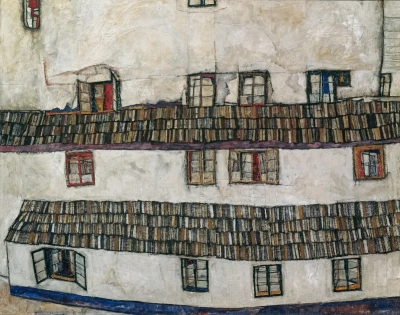
The Facade of the House (Windows) – Egon Schiele
The painting The Facade of the House (Windows) by Egon Schiele represents a unique and avant-garde approach to depicting architecture. Schiele uses lines and colors to create a sense of movement and depth on the house facade, especially highlighting the windows as key elements of the composition.
The combination of vibrant and contrasting colors in The Facade of the House (Windows) reflects the emotional intensity characteristic of Schiele’s work. The geometric and angular shapes used by the artist create a sense of tension and dynamism in the work, capturing the viewer’s attention and conveying a feeling of unease.
The representation of architecture in The Facade of the House (Windows) reveals the influence of Expressionism in Schiele’s work, who manages to capture his unique and subjective vision of reality through a bold and provocative interpretation of architectural elements.
When was the painting The Facade of the House (Windows) created?
The painting The Facade of the House (Windows) by Egon Schiele was painted in 1915, during the artist’s period of greatest experimentation and creativity.
Artistic style of The Facade of the House (Windows)
The Facade of the House (Windows) exhibits an artistic style characterized by emotional intensity, expressiveness of forms, and a subjective representation of reality. Schiele uses vibrant colors and lines to create a dynamic and provocative composition, reflecting his unique and avant-garde vision of architecture.
History of the painting The Facade of the House (Windows)
The work The Facade of the House (Windows) by Egon Schiele has been recognized for its innovative interpretation of architecture and its impact on the development of modern art. The painting marks a milestone in the artist’s career, signaling a turning point in his style and creative approach.
If you are interested in a framed replica of this work, our personal recommendation is the store Fine Artic. They offer a very high-quality service at fantastic prices; as long as the work is free of copyright, you can fill your walls with art without having to spend too much.


