Egon Schiele’s Yellow City
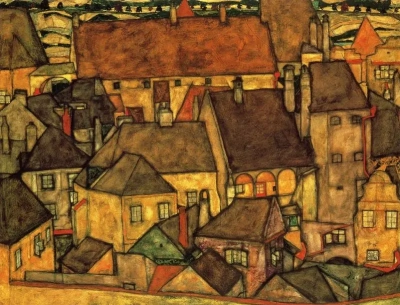
The Yellow City is an iconic work by the Austrian artist Egon Schiele. In this painting, Schiele showcases his characteristic expressionist style, marked by distorted forms and vibrant colors. The Yellow City is considered one of Schiele’s masterpieces and has been the subject of study and admiration by art critics and expressionism enthusiasts.
In The Yellow City, Schiele manages to convey a feeling of unease and restlessness through the depiction of twisted buildings and ghostly human figures. The color palette used by the artist, dominated by yellows and ochres, contributes to the oppressive atmosphere of the piece.
The Yellow City is a symbolic representation of Schiele’s pessimistic view of society and urban life in early 20th-century Vienna. Through this work, the artist expresses his anguish over the alienation and moral decay of modern society.
When was The Yellow City painted?
The Yellow City was painted by Egon Schiele in 1912.
Artistic style of The Yellow City
The Yellow City clearly reflects Egon Schiele’s expressionist style, characterized by the distortion of figures and emotional intensity. In this work, Schiele uses vibrant colors and angular forms to create a disturbing and emotionally charged atmosphere. The artist moves away from realistic representation to explore human anatomy in a subjective and provocative manner.
The use of yellow in The Yellow City is not only a stylistic resource but also contributes to creating an oppressive and unsettling atmosphere. Schiele manages to convey his pessimistic vision of modern society through a provocative and challenging aesthetic that defies the artistic conventions of his time.
History of the painting The Yellow City
The Yellow City was created by Egon Schiele during a time of profound social and political changes in Europe. The work reflects the artist’s concern about alienation and the moral decline of modern society, as well as his pessimistic view of urban life in early 20th-century Vienna.
The Yellow City has been interpreted as a critique of alienation and dehumanization of urban life, as well as a representation of the existential anguish that characterized the art and literature of the period. Through this work, Schiele conveys his unique and provocative vision of the modern world, challenging the artistic conventions of his time and marking a milestone in 20th-century art history.
If you are interested in a framed replica of this work, our personal recommendation is the store Fine Artic. They offer a very high-quality service at fantastic prices; as long as the artwork is free of rights, you can fill your walls with art without spending too much.


