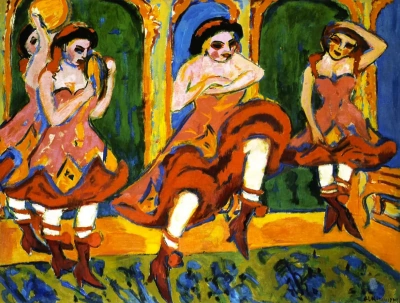
The Czardas Dance by Ernst Ludwig Kirchner
The Czardas Dance is a masterpiece by the German painter Ernst Ludwig Kirchner, depicting a group of energetic and colorful dancers amid a festive czardas dance. The work reflects the passion and vitality of the scene, capturing the emotion of the moment with vibrant brushstrokes and a dynamic composition.
The bright and contrasting colors used by Kirchner, as well as the distortion of forms and lines, are distinctive features of his expressionist style. The Czardas Dance is a perfect example of his innovative and daring approach to art, which challenges traditional conventions and seeks to convey the emotion and energy of modern life.
This work has been acclaimed as one of the most iconic pieces of German expressionism, and continues to be appreciated for its visual and emotional impact. Kirchner’s Czardas Dance continues to captivate viewers with its intensity and vibrant sense of movement.
When was the painting Czardas Dance painted?
The Czardas Dance was painted by Ernst Ludwig Kirchner in the year 1912.
Artistic style of Czardas Dance
Kirchner’s Czardas Dance clearly showcases his expressionist style, characterized by the intensity of colors, distortion of forms and lines, and emotional expressiveness. His innovative and bold approach to art is manifested in this work through vibrant brushstrokes and a dynamic composition that captures the energy and vitality of the represented scene.
History of the painting Czardas Dance
The Czardas Dance was created by Ernst Ludwig Kirchner during a period of intense artistic experimentation in his career. The work reflects his fascination with urban life and modern culture, as well as his interest in capturing emotion and movement through his unique expressionist technique.
If you are interested in a framed replica of this work, our personal recommendation is the store Fine Artic. They offer a very high-quality service at fantastic prices, so long as the work is royalty-free you can fill your walls with art without having to spend too much.


