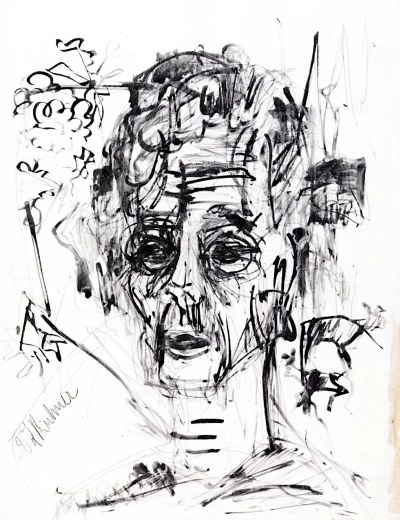
Self-Portrait (Morphine) – Ernst Ludwig Kirchner
The painting Self-Portrait (Morphine) painted by Ernst Ludwig Kirchner shows the artist through an introspective and melancholic gaze. In this work, Kirchner depicts himself in a reclining position, holding an opium pipe, suggesting the use of morphine to soothe physical or emotional pain. The vibrant color palette and the expressionist brushstroke contribute to conveying a sense of unrest and anguish.
The figure of the artist appears fragmented and distorted, reflecting the influence of expressionism in Kirchner’s work. The emotional intensity of the painting and the lost gaze of the self-portrait suggest a state of vulnerability and isolation. Morphine, as a central element of the composition, adds a layer of complexity and symbolism to the piece.
The painting technique employed by Kirchner in Self-Portrait (Morphine) reveals his profound exploration of the psyche and his own internal conflicts. The combination of vivid colors and distorted forms creates a disturbing and unsettling atmosphere, inviting the viewer to reflect on the fragility of existence.
When was the Self-Portrait (Morphine) painted?
The painting Self-Portrait (Morphine) by Ernst Ludwig Kirchner was painted in 1926.
Artistic style of Self-Portrait (Morphine)
El artistic style of Self-Portrait (Morphine) by Ernst Ludwig Kirchner falls within expressionism, characterized by the depiction of intense emotions and the distortion of reality. The work reflects the influence of the expressionist movement on Kirchner’s painting through vibrant colors and angular shapes that convey a sense of restlessness and anguish.
The energetic stroke and the artist’s emotive brushwork contribute to creating an atmosphere charged with tension and drama. The figure in the self-portrait, fragmented and distorted, reveals Kirchner’s deep psychological exploration and his ability to convey complex emotional states through painting.
History of the painting Self-Portrait (Morphine)
The painting Self-Portrait (Morphine) by Ernst Ludwig Kirchner was created at a moment of deep introspection and personal crisis for the artist. It is said that Kirchner used morphine as a means to escape his emotional and physical problems, which is reflected in the symbolic representation of the opium pipe in the work.
The story behind the painting reveals Kirchner’s internal struggle with his own demons and his quest for meaning amid anguish and suffering. Through Self-Portrait (Morphine), the artist invites us to contemplate the fragility of existence and the complexity of the human experience.
If you are interested in a framed replica of this work, our personal recommendation is the store Fine Artic. They offer a very high-quality service at fantastic prices, and as long as the work is free of rights, you can fill your walls with art without having to spend too much.


