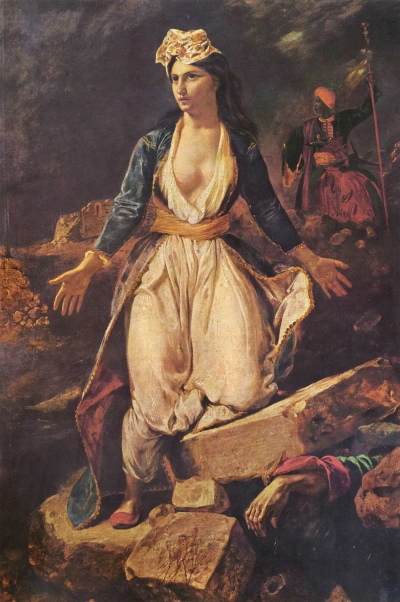
Greece on the Ruins of Missolonghi by Eugene Delacroix
The painting “Greece on the Ruins of Missolonghi” by Eugene Delacroix shows a Greco-Roman woman standing on piles of corpses in the city of Missolonghi. The painting is considered a symbol of the sacrifice and heroism of the Greek people in their struggle for independence.
Delacroix captures the tragedy and brutality of war in this work, using dark colors and energetic brushstrokes that reflect the fury and despair of the moment. The chaotic and dramatic composition conveys the emotional intensity and suffering of the depicted characters.
The work “Greece on the Ruins of Missolonghi” is a clear example of Romanticism in art, characterized by expressiveness, passion, and exaltation of feelings. Delacroix manages to convey a political and humanitarian message through this striking image.
When was the painting Greece on the Ruins of Missolonghi created?
The painting “Greece on the Ruins of Missolonghi” by Eugene Delacroix was painted in the year 1826.
Artistic style of Greece on the Ruins of Missolonghi
The painting “Greece on the Ruins of Missolonghi” by Eugene Delacroix falls within the Romanticism artistic movement, characterized by emotion, drama, and the exaltation of freedom and independence. Delacroix uses vibrant colors and energetic brushstrokes to express the emotional intensity and the tragedy of war.
History of the painting Greece on the Ruins of Missolonghi
The painting “Greece on the Ruins of Missolonghi” by Eugene Delacroix was created in response to the massacre of the city of Missolonghi during the Greek War of Independence. Delacroix was inspired by the bravery and sacrifice of the Greek people to depict the brutality of war and the struggle for freedom. The work had a great impact on the society of the time, raising awareness about the atrocities of war and the fight for the freedom of oppressed peoples.
If you are interested in a framed replica of this work, our personal recommendation is the store Fine Artic. They offer a very high-quality service at fantastic prices, as long as the work is royalty-free, you can fill your walls with art without having to spend too much.


