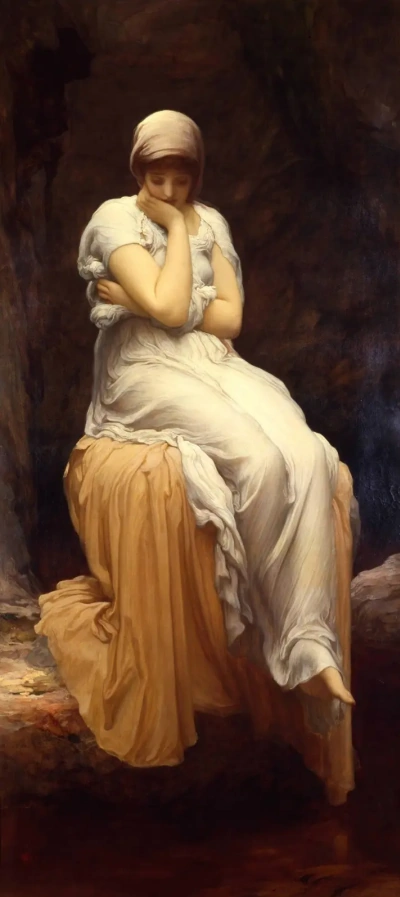
The painting Solitude by Frederic Leighton
The painting Solitude, painted by Frederic Leighton, is an artistic representation showing a solitary woman in a melancholic and serene setting.
In the work, one can appreciate the female figure in a desolate landscape, with an expression of sadness and deep thought on her face, conveying a feeling of loneliness and isolation.
The color palette used by Leighton in Solitude is mostly cool and somber, which helps create a melancholic and sorrowful atmosphere in the composition.
When was the painting Solitude painted?
The painting Solitude by Frederic Leighton was painted in the year 1890.
Artistic style of Solitude
The artistic style of the painting Solitude is characterized by its focus on representing solitude and melancholy through a serene and contemplative atmosphere.
Leighton uses a detailed and realistic technique in the work, emphasizing the emotions and mood of the female figure through her facial expression and body posture.
The composition and lighting in Solitude contribute to the feeling of isolation and loneliness, creating an emotional experience for the viewer.
History of the painting Solitude
The painting Solitude by Frederic Leighton was created as an exploration of human emotions and solitude in a quiet and contemplative environment.
The work has been recognized for its ability to convey feelings of isolation and melancholy in a powerful and evocative way, making it an iconic piece in 19th-century art history.
If you are interested in a framed replica of this work, our personal recommendation is the store Fine Artic. They offer a very high-quality service at fantastic prices; as long as the work is copyright-free, you can fill your walls with art without needing to spend too much.


