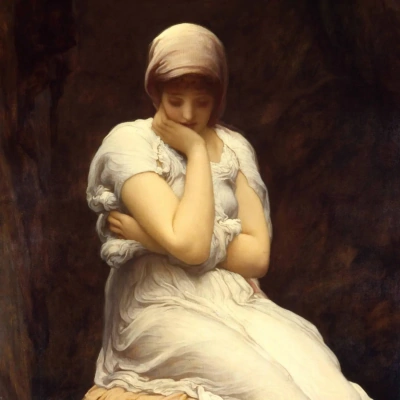
Solitude (fragment) by Frederic Leighton
Solitude (fragment) is a painting by the English artist Frederic Leighton, known for his neoclassical style and his depictions of feminine beauty. In this painting, a female figure can be seen in a calm and melancholic setting, emphasizing the expression of solitude and contemplation.
The composition of Solitude (fragment) shows a masterful command of the use of light and shadow, creating a serene and melancholic atmosphere. The female figure stands out amid the darkness, conveying a sense of introspection and tranquility.
Leighton manages to capture the emotion and fragility of solitude through the expression and pose of the female figure, creating a poetic and evocative atmosphere that invites contemplation and reflection.
When was the painting Solitude (fragment) painted?
The painting Solitude (fragment) by Frederic Leighton was painted in 1890.
Artistic style of Solitude (fragment)
The artistic style of Solitude (fragment) by Frederic Leighton fits within neoclassicism, characterized by its attention to detail, idealization of beauty, and representation of classical and mythological themes. Leighton stood out for his ability to create balanced and harmonious compositions, where the human figure was the main focus of attention.
History of the painting Solitude (fragment)
The work Solitude (fragment) by Frederic Leighton was created at a time when the artist was exploring themes related to solitude and contemplation. It is said that Leighton was inspired by his own experiences and emotions to create this representation of solitude, successfully conveying a deep sense of introspection and melancholy through his work.
If you are interested in a framed replica of this work, our personal recommendation is the store Fine Artic. They offer very high-quality service at fantastic prices; as long as the artwork is royalty-free, you can fill your walls with art without having to spend too much.


