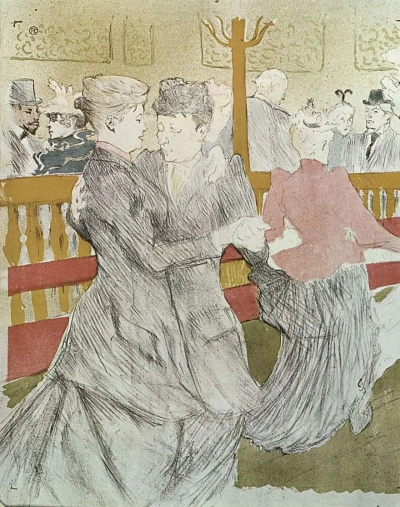
The painting Dancing at the Moulin Rouge by Henri de Toulouse-Lautrec
Henri de Toulouse-Lautrec was a prominent French painter known for his works capturing the nightlife in Paris. One of his most iconic works is the painting Dancing at the Moulin Rouge, which portrays the lively scene of the famous Parisian cabaret. In this painting, Toulouse-Lautrec shows dancers and spectators enjoying the music and dance in a festive and energetic atmosphere.
The artist uses vibrant colors and loose brushstrokes to capture the unique atmosphere of the Moulin Rouge. The figures in the foreground stand out for their movement and expression, while the background is full of details that bring the place to life. Dancing at the Moulin Rouge is a vivid and authentic representation of Parisian nightlife during the Belle Époque.
This masterpiece by Toulouse-Lautrec is a testament to his artistic genius and his ability to capture the essence of Parisian society at the end of the 19th century. Dancing at the Moulin Rouge is a celebration of life and culture at a time of effervescence and change in French history.
When was the painting Dancing at the Moulin Rouge created?
The painting Dancing at the Moulin Rouge was painted by Henri de Toulouse-Lautrec in 1890, during the Belle Époque in Paris.
Artistic style of Dancing at the Moulin Rouge
The artistic style of Toulouse-Lautrec’s Dancing at the Moulin Rouge is characterized by its focus on nightlife and the depiction of characters from Parisian society. The artist uses vibrant colors and loose brushstrokes to create a sense of movement and energy in the painting. Furthermore, Toulouse-Lautrec stands out for his ability to capture the atmosphere and emotion of the moments he depicts, making his works true windows into life during the Belle Époque.
History of the painting Dancing at the Moulin Rouge
The painting Dancing at the Moulin Rouge by Toulouse-Lautrec was created as part of a series of works the artist produced during his collaboration with the famous Parisian cabaret. It is said that Toulouse-Lautrec was a regular at the Moulin Rouge and drew inspiration from the nightlife and characters frequenting the place for his paintings. This particular work has become a symbol of the Belle Époque and an iconic representation of life in Paris at that time.
If you are interested in a framed replica of this work, our personal recommendation is the store Fine Artic. They offer a very high-quality service at fantastic prices; as long as the work is free of rights, you can fill your walls with art without having to spend too much.


