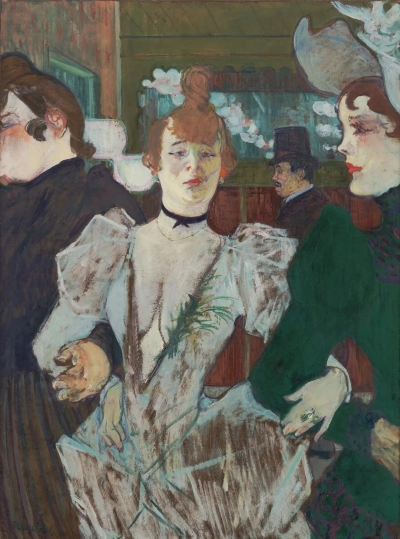
La goulue at the Moulin Rouge
La goulue at the Moulin Rouge is a famous painting by Henri de Toulouse-Lautrec that depicts La Goulue, a popular can-can dancer at the Moulin Rouge. The work captures the energy and vitality of the bohemian Parisian atmosphere of the late 19th century.
In the painting, you can see La Goulue in the middle of her performance, wearing her characteristic red and black dress, dancing with passion and extravagant movements. The painting reflects the atmosphere of fun and eccentricity that prevailed at the Moulin Rouge during that time.
The combination of vibrant colors, loose brushstrokes, and the use of the human figure as the central element make La goulue at the Moulin Rouge an iconic work of post-impressionism.
When was the painting La goulue at the Moulin Rouge created?
The painting La goulue at the Moulin Rouge was painted in 1891.
Artistic style of La goulue at the Moulin Rouge
The artistic style of La goulue at the Moulin Rouge is framed within post-impressionism, characterized by the depiction of everyday scenes with intense colors and visible brushstrokes. Toulouse-Lautrec manages to capture the essence of the Parisian cabaret through a vibrant color palette and focus on the human figure.
History of the painting La goulue at the Moulin Rouge
The creation of La goulue at the Moulin Rouge is closely related to Toulouse-Lautrec’s fascination with nightlife and the extravagant characters who populated the Moulin Rouge. The work had a significant impact on the artistic representation of the time by highlighting the beauty and dynamism of the can-can dance through a modernist and bold approach.
If you are interested in a framed replica of this work, our personal recommendation is the store Fine Artic. They offer a very high-quality service at fantastic prices, as long as the work is free of rights you can fill your walls with art without spending too much.


