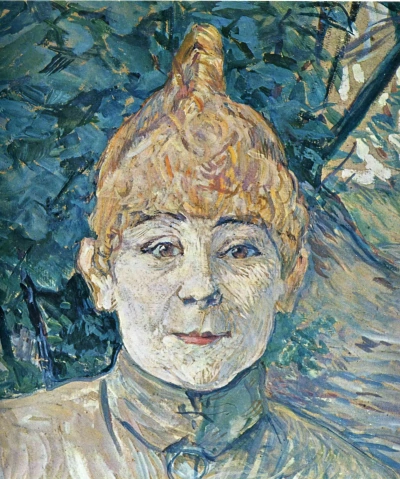
Portrait of a Street Woman
The painting Portrait of a Street Woman, painted by Henri de Toulouse-Lautrec, is a work that stands out for its realistic depiction of urban life in the 19th century.
In this painting, the artist shows us an anonymous street woman, capturing her expression and presence in a unique and honest way.
The color palette used by Toulouse-Lautrec and his distinctive technique make this portrait a memorable piece in art history.
When was the painting Portrait of a Street Woman created?
The painting Portrait of a Street Woman It was painted in 1891 during the period known as the Belle Époque in France.
Artistic style of Portrait of a Street Woman
The artistic style of the painting Portrait of a Street Woman by Henri de Toulouse-Lautrec falls within post-impressionism, characterized by the use of vibrant colors and expressive brushstrokes.
The influence of impressionism is evident in the depiction of light and movement in the work, but Toulouse-Lautrec adds his own unique and modern style.
The combination of realistic elements with a touch of subjectivity makes this portrait an innovative and relevant piece in art history.
History of the painting Portrait of a Street Woman
The creation of the painting Portrait of a Street Woman was marked by Toulouse-Lautrec’s constant quest to capture the essence of Paris’s nightlife.
It is rumored that the model for the portrait was a prostitute whom the artist knew personally, adding a layer of complexity and intrigue to the work.
If you’re interested in a framed replica of this work, our personal recommendation is the store Fine Artic. They offer a very high quality service at fantastic prices; as long as the work is royalty-free, you can fill your walls with art without spending too much.


