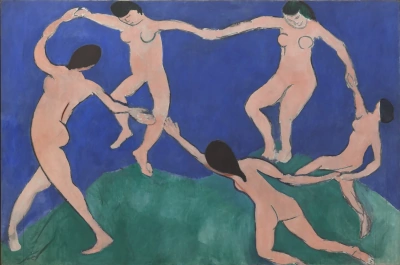
Dance (I) by Henri Matisse
The painting Dance (I) is a masterpiece by the French artist Henri Matisse, known for his unique and colorful style. In this painting, Matisse captures the energy and joy of a dance through abstract shapes and vibrant colors.
The composition of the painting focuses on stylized figures that appear to move to the rhythm of the music. The intense colors and loose brushstrokes create a feeling of movement and dynamism throughout the work.
The painting Dance (I) is a prominent example of Matisse’s characteristic style, known for its bold use of color and focus on emotional expression. This masterpiece is considered one of the most important pieces of modern art.
When was the painting Dance (I) created?
The painting Dance (I) by Henri Matisse was painted in 1909, during his Fauvist period.
Artistic style of Dance (I)
The artistic style of Dance (I) is characterized by the combination of simplified geometric shapes, vibrant colors, and expressive brushstrokes that reflect the passion and movement of the dance. Matisse manages to convey a sense of joy and vitality through his innovative approach in this work.
History of the painting Dance (I)
The creation of Dance (I) was a turning point in Matisse’s career, marking the beginning of his exploration of abstraction and emotional expression through color and form. This masterpiece has been recognized as one of the most iconic paintings of the 20th century, impacting generations of artists and viewers with its unique beauty and contagious energy.
If you are interested in a framed replica of this work, our personal recommendation is the store Fine Artic. They offer a very high-quality service at fantastic prices, and as long as the artwork is copyright-free, you can fill your walls with art without spending too much.


