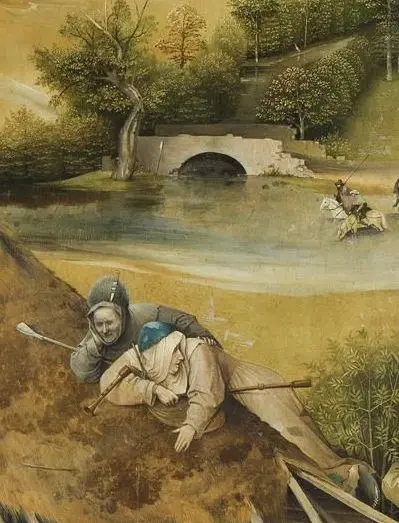
The Adoration of the Magi. The central part of the triptych. Fragment.
La Adoration of the Magi is the central part of the triptych painted by Hieronymus Bosch.
In this painting, the moment is depicted when the three Wise Men arrive to adore the Child Jesus, offering him gifts of great symbolic value such as gold, frankincense, and myrrh.
Bosch stands out for his ability to portray detailed and mysterious scenes, filled with symbolism and hidden meanings that invite the viewer’s reflection.
When was the painting The Adoration of the Magi. The central part of the triptych. Fragment. painted?
The painting The Adoration of the Magi was painted by Hieronymus Bosch in the year 1510.
Artistic style of The Adoration of the Magi. The central part of the triptych. Fragment.
The artistic style of The Adoration of the Magi is framed within the Flemish Renaissance, characterized by a detailed representation of figures, the use of intense colors, and the presence of symbolic and allegorical elements.
Bosch’s work is distinguished by his overflowing imagination and the inclusion of fantastic elements in his compositions, which gives it a unique and recognizable style.
History of the painting The Adoration of the Magi. The central part of the triptych. Fragment.
The history of The Adoration of the Magi by Hieronymus Bosch stands out for its influence on the religious art of the time, being one of the most emblematic works of the Flemish painter.
It is believed that Bosch created this triptych for the chapel of a nobleman of the time, as a demonstration of his talent and skill to represent sacred scenes with a personal and rather peculiar approach.
If you are interested in a framed replica of this work, our personal recommendation is the store Fine Artic. They offer a very high-quality service at fantastic prices, as long as the work is free of rights you can fill your walls with art without having to spend too much.


