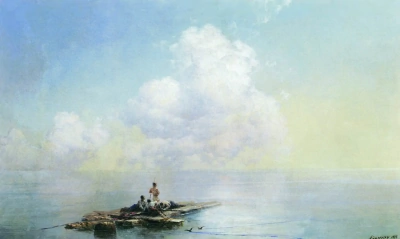
Morning After the Storm, painted by Ivan Aivazovsky
The painting Morning After the Storm by Ivan Aivazovsky depicts a seascape of great beauty and drama. In the work, you can see the clear sky after a storm, with clouds moving away on the horizon and sun rays illuminating the rough sea. Aivazovsky manages to convey the feeling of calm and peace that follows the tempest in this piece.
The composition of the painting is impressive, with a palette of intense colors that highlight the brightness of the seascape. Aivazovsky’s masterful technique to capture the light and movement of the water is evident in each brushstroke, creating a unique and evocative atmosphere.
The work Morning After the Storm is an exceptional example of Ivan Aivazovsky’s talent for depicting nature at its finest, becoming one of his most recognized and appreciated works worldwide.
When was the painting Morning After the Storm painted?
The painting Morning After the Storm by Ivan Aivazovsky was painted in the 19th century, precisely in the year 1851.
Artistic style of Morning After the Storm
The artistic style of the painting Morning After the Storm fits within Romanticism, characterized by the emotional representation of nature and the exploration of the sublime. Aivazovsky combines realistic elements with poetic sensitivity, creating a work that goes beyond the purely visual to connect with the viewer’s emotions.
History of the painting Morning After the Storm
The painting Morning After the Storm by Ivan Aivazovsky was commissioned by a private collector who was impressed by the artist’s ability to capture light and marine atmosphere. The work quickly became a critical and public success, consolidating Aivazovsky’s reputation as one of the best marine landscape painters of his time.
If you are interested in a framed replica of this work, our personal recommendation is the store Fine Artic. They offer a very high-quality service at fantastic prices, and as long as the artwork is royalty-free, you can fill your walls with art without having to spend too much.


