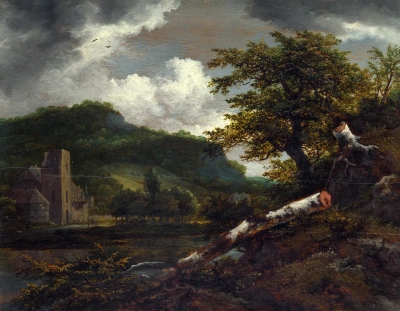
Landscape with a House in Ruins by the River by Jakob van Isaacs Ruisdael
The painting ‘Landscape with a House in Ruins by the River’ by Jakob van Isaacs Ruisdael is a masterpiece that depicts a natural landscape with an abandoned, decaying house beside a serene river. The painting captures the melancholic beauty of nature, blending architectural ruins with the lush surrounding vegetation.
Ruisdael’s masterful technique is evident in the detailed depiction of textures and colors, creating a unique atmosphere that invites reflection. The contrast between the house’s ruin and the serenity of the natural surroundings is a recurring theme in the artist’s work, who manages to convey a deep sense of nostalgia and tranquility.
The carefully balanced composition and the subtle color palette add complexity to the work, inviting the viewer to immerse themselves in a dreamlike and evocative landscape. ‘Landscape with a House in Ruins by the River’ is a masterful representation of Ruisdael’s talent for capturing the very essence of nature in its purest state.
When was the painting Landscape with a House in Ruins by the River painted?
The painting ‘Landscape with a House in Ruins by the River’ by Jakob van Isaacs Ruisdael was painted in the 17th century, during the Dutch Golden Age of painting.
Artistic style of Landscape with a House in Ruins by the River
The painting ‘Landscape with a House in Ruins by the River’ by Jakob van Isaacs Ruisdael clearly shows his characteristic style of Dutch Baroque landscaper, focusing on the realistic depiction of nature and exploring themes such as the transience of human life and the melancholic beauty of wild nature.
Meticulous attention to detail and mastery in capturing light and atmosphere are distinctive traits of Ruisdael’s style, reflected in this work alongside the depiction of ruined architecture as a metaphor for the transience of life.
History of the painting Landscape with a House in Ruins by the River
The creation of the painting ‘Landscape with a House in Ruins by the River’ by Jakob van Isaacs Ruisdael was influenced by 17th-century Dutch landscapers and their pursuit of faithful representation of nature in all its forms. Ruisdael, known for his ability to portray the beauty and melancholy of nature, achieved with this work the capture of the essence of life’s transience through the depiction of the ruined house and the surrounding natural environment.
The impact of this work on art history lies in its ability to move the viewer and evoke reflection on the fleetingness of human life, as well as in Ruisdael’s technical and artistic mastery in capturing the beauty and serenity of nature in its purest state.
If you are interested in a framed replica of this work, our personal recommendation is the store Fine Artic. They offer very high-quality service at fantastic prices, and as long as the work is free of rights you can fill your walls with art without needing to spend too much.


