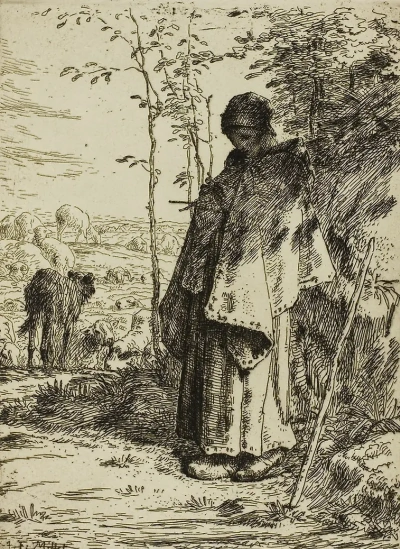
The painting Pastora, painted by Jean-François Millet
The work Pastora is a representation of a French peasant woman in her rural environment, showing a scene of serenity and simplicity. The figure of the woman in the foreground, dressed in typical attire of the time, stands out amid a countryside landscape full of delicate details.
The artist Jean-François Millet manages to capture the essence of peasant life and the connection with nature through his masterful technique. The soft colors and subtle lighting give a feeling of peace and harmony in the composition, reflecting the beauty of the everyday.
The work Pastora is a prominent example of Millet’s poetic realism, which focuses on representing rural life in an authentic and emotional way. Through this painting, the artist shares an intimate and moving vision of life in the countryside in the 19th century.
When was the painting Pastora painted?
The painting Pastora by Jean-François Millet was painted in the year 1856.
Artistic style of Pastora
The artistic style of Pastora is framed within poetic realism, characterized by its sincere and emotional representation of rural life. Millet manages to capture the beauty of everyday life and the connection with nature through a palette of soft colors and careful lighting.
History of the painting Pastora
The work Pastora by Jean-François Millet was created at a time when the artist sought to portray peasant life authentically and movingly. Through this painting, Millet conveys the beauty and serenity of life in the countryside, capturing the essence of a fleeting and eternal moment.
If you are interested in a framed replica of this work, our personal recommendation is the store Fine Artic. They offer a very high-quality service at fantastic prices, as long as the work is free of rights you can fill your walls with art without having to spend too much.


