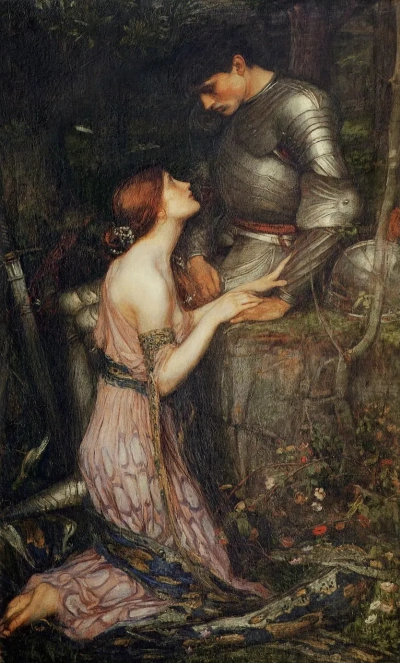
The painting Lamia by John William Waterhouse
The painting Lamia, painted by John William Waterhouse, is a work of art that represents a figure from Greek mythology. Lamia, in legend, was a queen of Libya with magical abilities who, after the death of her children, became a child-devouring monster. In the painting, Waterhouse captures the duality of Lamia, showing her beauty and her dark side.
The image of Lamia in the painting is of a young and beautiful woman, with a melancholic expression on her face. The color palette used by Waterhouse creates a mysterious and sinister atmosphere, highlighting the contrast between Lamia’s beauty and her monstrous nature.
Waterhouse’s work, known for its romantic style and fascination with mythology and classical literature, reflects his ability to combine visual narrative with the exploration of deep and dark themes.
When was the painting Lamia made?
The painting Lamia by John William Waterhouse was painted in the year 1905.
Artistic style of Lamia
The artistic style of Lamia reflects the influence of the Pre-Raphaelite movement in John William Waterhouse’s work, characterized by attention to detail, a rich color palette, and the representation of literary and mythological themes. In this painting, Waterhouse demonstrates his mastery in the depiction of the human figure, as well as his ability to create evocative and emotional atmospheres.
Waterhouse’s technique in Lamia shows his skill in combining realistic elements with a touch of fantasy and symbolism, creating a work of art that invites contemplation and reflection on human duality and the nature of good and evil.
History of the painting Lamia
The painting Lamia by John William Waterhouse was created at a time when the artist was exploring themes from classical mythology and romantic literature in his work. The figure of Lamia, with her mix of beauty and danger, reflects Waterhouse’s fascination with complex and enigmatic female characters.
Lamia has been the subject of various interpretations over time, being considered both a symbol of fatal femininity and redemption through suffering. Waterhouse’s work has endured over time as an iconic representation of the mythological figure, highlighting his talent for capturing the essence of ancient stories and reinventing them through his own visual language.
If you are interested in a framed replica of this work, our personal recommendation is the store Fine Artic. They offer a very high-quality service at fantastic prices, as long as the work is free of rights you can fill your walls with art without spending too much.


