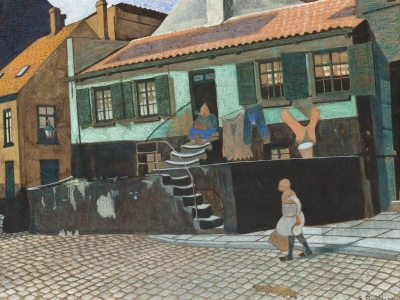
The pulpit in Ostend painted by Leon Spilliaert
The painting The Pulpit in Ostend, painted by Leon Spilliaert, depicts a mysterious and evocative scene featuring a solitary pulpit on the beach of the coastal city of Ostend, Belgium. The atmosphere created by Spilliaert in this work is one of deep introspection and solitude, with a cloudy sky and a turbulent sea in the background. The lighting and dark colors used by the artist contribute to conveying a sense of melancholy and mystery.
The use of chiaroscuro technique in The Pulpit in Ostend highlights the contrasts between light and shadow, creating a sense of depth and adding an element of drama to the composition. The figure of the pulpit in the foreground stands out as an enigmatic element inviting reflection and contemplation.
The work The Pulpit in Ostend fuses elements of symbolism and expressionism, showing the influence of artistic movements such as surrealism and modernism. Spilliaert manages to capture the essence of a specific moment and place, but also evokes universal and timeless emotions in the viewer.
When was the painting The Pulpit in Ostend painted?
The painting The Pulpit in Ostend by Leon Spilliaert was painted in the year 1908.
Artistic style of The Pulpit in Ostend
The painting The Pulpit in Ostend by Leon Spilliaert is characterized by its personal and timeless style, which combines elements of symbolism, expressionism, and surrealism. The dark color palette and chiaroscuro technique employed by the artist help create a mysterious and evocative atmosphere that invites contemplation and reflection.
The composition of the work, with the solitary pulpit in the foreground and the rough sea in the background, reflects solitude and melancholy, recurring themes in Spilliaert’s work. The influence of modernism is evident in the subjective and emotional representation of an urban landscape, beyond mere realistic depiction.
The Pulpit in Ostend stands out for its originality and its ability to communicate universal emotions through an apparently simple scene but charged with symbolism and deep significance.
History of the painting The Pulpit in Ostend
The painting The Pulpit in Ostend by Leon Spilliaert was created with the intention of exploring human loneliness and melancholy in the face of the vastness of the sea and nature. The solitary figure of the pulpit on the beach of Ostend becomes a symbol of spiritual quest and introspection.
The work has been acclaimed by critics and viewers for its ability to convey emotions and provoke reflection in its audience. The impact of The Pulpit in Ostend transcends its era and remains relevant today, demonstrating the timelessness and universality of Spilliaert’s art.
If you are interested in a framed replica of this work, our personal recommendation is the store Fine Artic. They offer a very high-quality service at fantastic prices, as long as the artwork is free of rights, allowing you to fill your walls with art without spending too much.


