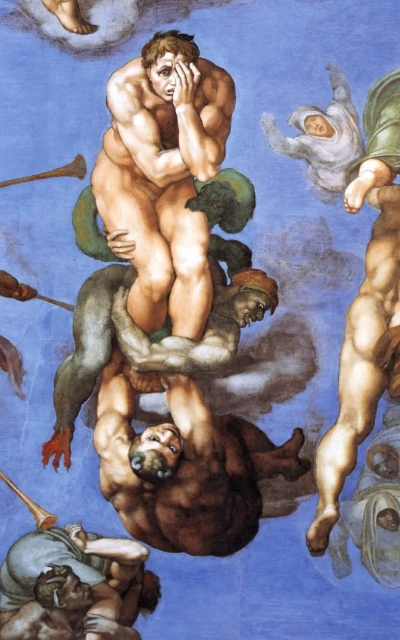
The Last Judgment, detail: The damned in the underworld. painted by Michelangelo
El The Last Judgment, detail: The damned in the underworld, is a masterpiece of the Renaissance created by the Italian artist Michelangelo. This fresco painting is located in the Sistine Chapel in the Vatican, on the wall behind the altar. It depicts the final judgment described in the Bible, with the condemnation of sinners to hell.
At the bottom of the painting, the condemned are seen being dragged by demons into the abyss, where they suffer their eternal punishment. Michelangelo manages to convey a sense of chaos and despair through the expressions of the characters and the composition of the scene.
The work was received with controversy in its time due to the explicit depiction of nudity and violence. However, over time it has become one of Michelangelo’s most iconic works and of Western art in general.
When was the painting The Last Judgment, detail: The damned in the underworld painted?
The painting The Last Judgment, detail: The damned in the underworld by Michelangelo was painted between 1536 and 1541.
Artistic style of The Last Judgment, detail: The damned in the underworld.
The artistic style of The Last Judgment, detail: The damned in the underworldfalls within the late Renaissance. Michelangelo uses masterful technique in the representation of human figures, with skilled use of anatomy and facial expressiveness.
The composition and lighting of the work create a strong visual impact, emphasizing the sense of movement and drama in the scene. Michelangelo conveys the chaotic and terrifying atmosphere of the final judgment through his technical skill and artistic expressiveness.
History of the painting The Last Judgment, detail: The damned in the underworld.
The painting The Last Judgment, detail: The damned in the underworld by Michelangelo was commissioned by Pope Clement VII and later completed by Paul III. The work caused controversy in its time due to the graphic and disturbing depiction of final salvation and condemnation, but over time it has become one of the most recognized works of Renaissance art, influencing generations of later artists.
If you are interested in a framed replica of this work, our personal recommendation is the store Fine Artic. They offer a very high-quality service at fantastic prices; as long as the work is royalty-free, you can fill your walls with art without spending too much.


