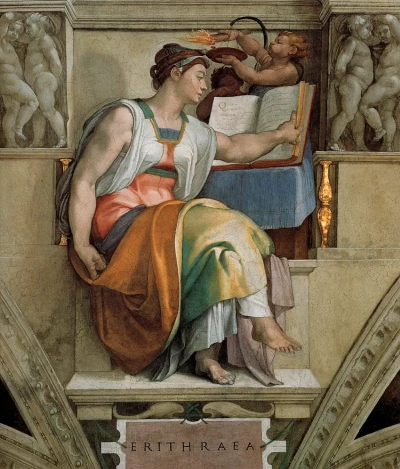
The Sistine Chapel. The Erythraean Sibyl painted by Michelangelo
The painting The Sistine Chapel. The Erythraean Sibyl is a masterpiece by Michelangelo, which is part of the decoration of the Sistine Chapel in the Vatican. This painting depicts one of the sibyls, prophetesses of antiquity, in this case the Erythraean sibyl, who according to legend predicted the coming of Christ.
The Erythraean sibyl is portrayed in a majestic and enigmatic pose, with an expression that combines wisdom and mystery. The technique used by Michelangelo in this work is impressive, with a play of light and shadow that highlights the figure of the sibyl.
This work is part of the series of frescoes that Michelangelo painted in the Sistine Chapel between 1508 and 1512, showcasing his artistic genius and mastery of human anatomy. The Sistine Chapel. The Erythraean Sibyl is one of the most iconic paintings of this collection, which continues to impress visitors to this day.
When was the painting The Sistine Chapel. The Erythraean Sibyl painted?
The painting The Sistine Chapel. The Erythraean Sibyl was painted by Michelangelo between 1508 and 1512.
Artistic style of The Sistine Chapel. The Erythraean Sibyl
The artistic style of The Sistine Chapel. The Erythraean Sibyl is characterized by mastery in the representation of the human figure, the masterful use of light and shadow, and the expressiveness of the faces. Michelangelo demonstrates in this work his command of Renaissance art, injecting life and emotion into the depicted sibyl.
The composition of the painting, with the sibyl in the foreground and a mysterious background, creates a sense of depth and mystery that captivates the viewer. The realism with which the human figure is represented and the anatomical details show Michelangelo’s technical and artistic skill at its highest level.
History of the painting The Sistine Chapel. The Erythraean Sibyl
The painting The Sistine Chapel. The Erythraean Sibyl was commissioned to Michelangelo by Pope Julius II in the context of decorating the Sistine Chapel. This work is part of a series of frescoes representing scenes from the Old Testament and figures from paganism, with the goal of beautifying the space and conveying a religious message.
The creation of this painting was a challenge for Michelangelo, who dedicated years of intense and meticulous work to complete it. The impact of The Sistine Chapel. The Erythraean Sibyl on art history is undeniable, serving as a benchmark of the grandeur and genius of the Italian Renaissance.
If you are interested in a framed replica of this work, our personal recommendation is the store Fine Artic. They offer a very high-quality service at fantastic prices; as long as the work is copyright-free, you can fill your walls with art without having to spend too much.


