Niko Pirosmani (Pirosmanashvili)
The painting The Hay Wain by Niko Pirosmani (Pirosmanashvili)
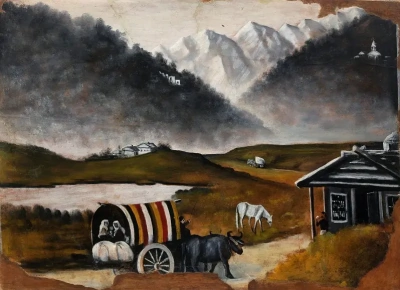
The Hay Wain is one of the best-known works by the Georgian artist Niko Pirosmani, also known as Pirosmanashvili. It is an oil painting depicting a cart pulled by horses across a rural landscape typical of the Georgia region.
In this work, Pirosmani demonstrates his ability to capture rural life and the simplicity of the Georgian countryside. The vibrant colors and detailed composition make the viewer feel immersed in the scene, as if present in the field at that moment.
With his unique and self-taught style, Pirosmani manages to convey the beauty and tranquility of nature through The Hay Wain, making it one of his most iconic and beloved pieces.
When was the painting The Hay Wain painted?
The painting The Hay Wain by Niko Pirosmani was painted in 1916, during the first half of the 20th century.
Artistic style of The Hay Wain
The artistic style of The Hay Wain by Niko Pirosmani is characterized by its focus on rural life and nature, with vibrant colors and an attention to detail that reflects the reality of peasant life in Georgia. His self-taught technique and unique way of representing the rural world distinguish him as a singular and innovative artist for his time.
History of the painting The Hay Wain
The history of The Hay Wain by Niko Pirosmani centers on the artist’s passion for capturing the beauty of Georgian rural life and his ability to convey that passion through his works. The painting has been recognized as one of the most emblematic pieces of Georgian art and has had a lasting impact on the culture and art of the region.
If you are interested in a framed replica of this work, our personal recommendation is the shop Fine Artic. They offer a very high-quality service at fantastic prices; as long as the work is free of rights, you can fill your walls with art without having to spend too much.


