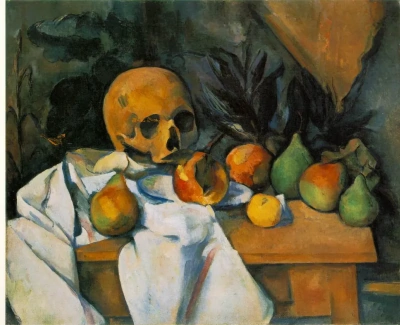
Still life with a skull
La Still life with a skull is a work painted by the French artist Paul Cezanne. This work is characterized by its representation of inanimate objects, such as fruits and a skull, arranged on a table in a three-dimensional space.
Cezanne uses a palette of sober, earthy colors in this work, creating a melancholic and mysterious atmosphere. The loose brushstroke technique and asymmetrical composition add a sense of movement and dynamism to the painting.
La Still life with a skull is one of Cezanne’s most iconic works and has been the subject of study and admiration by art critics and painting lovers worldwide.
When was the painting Still life with a skull painted?
The painting Still life with a skull was painted by Paul Cezanne in the year 1898.
Artistic style of Still life with a skull
The work Still life with a skull falls within the post-Impressionism, an artistic movement characterized by experimentation with form and color, as well as the search for the artist’s personal expression. Cezanne, through his unique style, manages to capture the beauty of the everyday and convey complex emotions through the arrangement of objects in the composition.
History of the painting Still life with a skull
La Still life with a skull is one of Cezanne’s later works, painted at a moment in his career when he was exploring new techniques and themes in his art. This particular work reflects the artist’s obsession with form and light, as well as his interest in representing reality in an innovative and provocative way.
If you are interested in a framed replica of this work, our personal recommendation is the store Fine Artic. They offer very high-quality service at fantastic prices; as long as the work is free of rights, you can fill your walls with art without spending too much.


