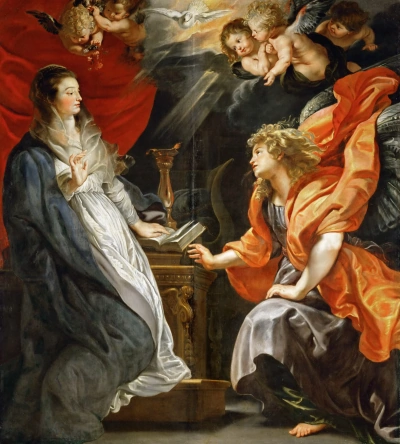
The Annunciation painted by Peter Paul Rubens
The Annunciation is a masterpiece by the Flemish painter Peter Paul Rubens, depicting the moment when the Archangel Gabriel announces to the Virgin Mary that she will give birth to the Son of God.
In this work, Rubens uses vibrant colors and masterful technique to capture the emotion and mystery of this transcendental moment in Christian history.
The composition of the painting, with the Virgin Mary in an attitude of amazement and the Archangel Gabriel in a dynamic pose, creates a contrast that highlights the importance of the divine message.
When was the painting The Annunciation created?
The painting The Annunciation by Peter Paul Rubens was created in the 17th century, during the period known as the Baroque Age.
Artistic style of The Annunciation
Rubens’ The Annunciation clearly shows his mastery of the Baroque style, characterized by the use of intense colors, the representation of heightened emotions, and detailed recreation of human and architectural figures.
Rubens’ painting technique, with loose brushstrokes and palpable texture, brings dynamism and life to the scene, making the characters appear to come alive before our eyes.
The use of light and shadow in The Annunciation adds depth and drama to the composition, creating a theatrical effect that captures the viewer’s attention and immerses them in the depicted scene.
History of the painting The Annunciation
The work The Annunciation by Rubens was commissioned by a noble family from Antwerp to decorate their private chapel, as a display of their devotion and wealth.
The painting quickly became one of the artist’s most admired and valued works, demonstrating his creative genius and his ability to capture the essence of religious themes in a moving and powerful way.
If you are interested in a framed replica of this work, our personal recommendation is the store Fine Artic. They offer a very high-quality service at fantastic prices, and as long as the work is copyright-free, you can fill your walls with art without having to spend too much.


