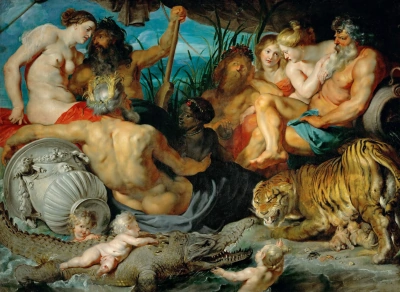
The Four Parts of the World (The Four Rivers of Paradise) by Peter Paul Rubens
The Four Parts of the World (The Four Rivers of Paradise) is an iconic work by the Flemish painter Peter Paul Rubens. In this painting, Rubens depicts the four rivers that according to the Bible surrounded the Garden of Eden, symbolizing the four parts of the world known at that time. The work shows a dynamic and full of movement composition, with a rich color palette and detailed work in the representation of the figures.
The architectural elements present in the painting, along with the presence of mythological and allegorical figures, reflect Rubens’s interest in ancient classical culture. The work is characterized by an abundance of details and mastery in the depiction of forms, making it one of the artist’s most outstanding pieces.
The Four Parts of the World (The Four Rivers of Paradise) is an example of Rubens’s talent and creativity in masterfully depicting mythological and religious themes, combining symbolic elements with a unique and unmistakable style.
When was the painting The Four Parts of the World (The Four Rivers of Paradise) painted?
The painting The Four Parts of the World (The Four Rivers of Paradise) by Peter Paul Rubens was painted in the year 1612.
Artistic style of The Four Parts of the World (The Four Rivers of Paradise)
The artistic style of The Four Parts of the World (The Four Rivers of Paradise) is characterized by an abundance of details, rich chromatics, and mastery in the depiction of figures. Rubens combines mythological and religious elements with a unique style that grants him a prominent place in art history.
The work shows the influence of ancient classical culture in the representation of figures and scenes, as well as careful attention to detail and composition. Rubens manages to convey a sense of movement and life through his dynamic and energetic brushwork.
The masterful use of color and light, along with the depiction of figures in dramatic and expressive poses, make The Four Parts of the World (The Four Rivers of Paradise) an exceptional work that stands out for its beauty and complexity.
History of the painting The Four Parts of the World (The Four Rivers of Paradise)
The creation of The Four Parts of the World (The Four Rivers of Paradise) by Peter Paul Rubens is framed within his period of greatest success and recognition as a painter. The work was commissioned by an Italian noble as part of a series of paintings with mythological and religious themes to decorate his palace.
The painting was very well received at its time and became one of Rubens’s most admired pieces, demonstrating his skill in combining symbolic elements with a personal and unmistakable style. The Four Parts of the World (The Four Rivers of Paradise) has endured over the centuries as an outstanding example of the Flemish master’s talent.
If you are interested in a framed replica of this work, our personal recommendation is the store Fine Artic. They offer a very high-quality service at fantastic prices, as long as the work is free of rights you can fill your walls with art without having to spend too much.


