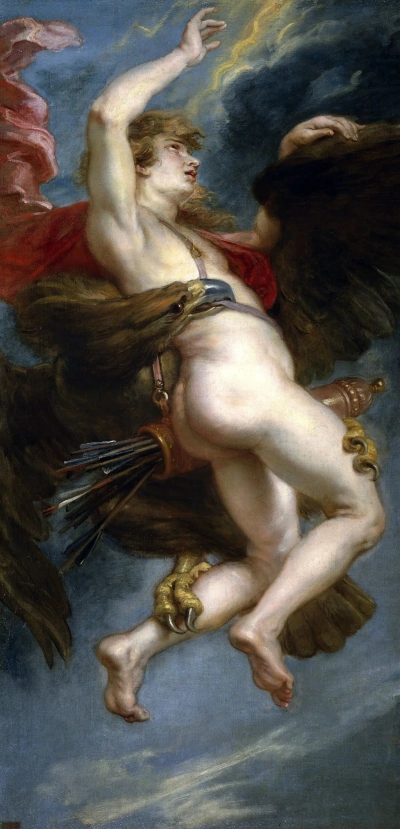
The Rape of Ganymede by Peter Paul Rubens
The painting The Rape of Ganymede depicts a mythological scene in which Zeus, disguised as an eagle, abducts the young Ganymede to make him the cupbearer of the gods on Olympus. The work shows Ganymede being carried by the eagle toward the heavens, with a look of surprise on his face.
This painting by Peter Paul Rubens stands out for its use of vibrant colors and detailed realism in the depiction of the bodies and fabrics. The composition is dynamic and full of movement, capturing the exact moment of the abduction with great mastery.
The theme of the abduction of Ganymede was very popular in Renaissance and Baroque art, as it symbolized male beauty and attraction to the divine. Rubens manages to portray this story with his characteristic Baroque style, full of emotion and drama.
When was The Rape of Ganymede painted?
The painting The Rape of Ganymede by Peter Paul Rubens was painted in the year 1611.
Artistic style of The Rape of Ganymede
The artistic style of Rubens’ The Rape of Ganymede is characterized by its use of intense colors, mastery of human anatomy, and ability to capture emotion in his paintings. The influence of the Baroque is evident in the dynamic composition and dramatism of the scene.
History of the painting The Rape of Ganymede
The painting The Rape of Ganymede was commissioned by the Duke of Mantua, who was a great admirer of Rubens’ art. The work caused a sensation in its time because of its beauty and the controversial representation of a mythological theme with homoerotic connotations. Throughout the centuries, the painting has been admired for its artistic quality and its impact on the history of art.
If you are interested in a framed replica of this work, our personal recommendation is the store Fine Artic. They offer a very high-quality service at fantastic prices, whenever the artwork is royalty-free you can fill your walls with art without spending too much.


