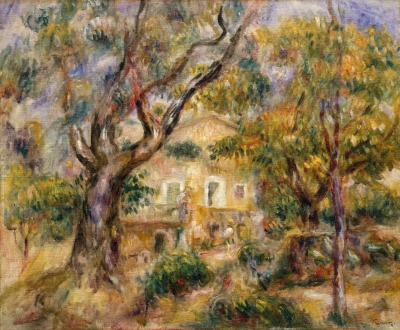
The painting Collet señorial, Cagnes sur Mer painted by Pierre Auguste Renoir
Collet señorial, Cagnes sur Mer is a masterpiece painted by the famous French artist Pierre Auguste Renoir. This painting captures the beauty of a coastal landscape in the city of Cagnes sur Mer, with a manor house as the focal point.
Renoir manages to capture the sunlight in every brushstroke, creating a warm and welcoming atmosphere. The soft tones and delicacy of the details make this painting a true gem of Impressionism.
The combination of pastel colors and harmonious composition make Collet señorial, Cagnes sur Mer a timeless work that continues to captivate viewers worldwide.
When was the painting Collet señorial, Cagnes sur Mer painted?
The painting Collet señorial, Cagnes sur Mer was painted by Pierre Auguste Renoir in the year 1910.
Artistic style of Collet señorial, Cagnes sur Mer
Collet señorial, Cagnes sur Mer reflects the characteristic style of Impressionism, with loose brushstrokes and a vibrant color palette. Renoir masterfully captures the atmosphere and light of the landscape, creating a work full of life and movement.
The attention to detail and sensitivity in the representation of nature make this painting an emblematic example of Renoir’s talent and the Impressionist movement in general.
History of the painting Collet señorial, Cagnes sur Mer
The story behind Collet señorial, Cagnes sur Mer is an example of Renoir’s dedication to capturing the beauty of nature. Through this work, the artist transports us to a charming landscape and invites us to appreciate the magic of the French coast.
The impact of this painting transcends time and space, inspiring generations of artists and viewers to appreciate the beauty of nature and the importance of light in art.
If you are interested in a framed replica of this work, our personal recommendation is the store Fine Artic. They offer a very high-quality service at fantastic prices, and as long as the work is free of rights, you can fill your walls with art without needing to spend too much.


