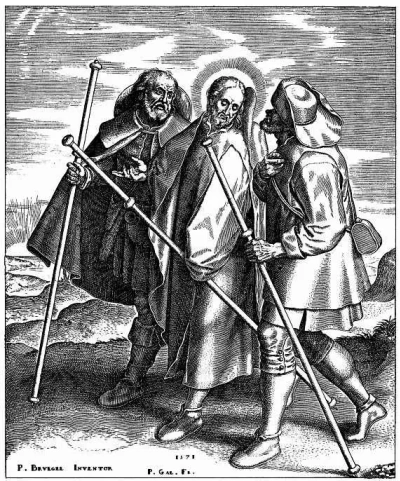
Jesus and the Disciples on the Road to Emmaus – Pieter Bruegel The Elder
The painting “Jesus and the Disciples on the Road to Emmaus” by Pieter Bruegel The Elder depicts the biblical passage in which Jesus encounters two of his disciples on the road to Emmaus, after his resurrection. The disciples, without recognizing Jesus immediately, are surprised by his words and gestures as they share a meal together. Bruegel captures the emotion and disbelief of the disciples in this unique encounter.
The composition of the painting and the details in the clothing and facial expressions of the characters reflect Bruegel’s mastery in portraying biblical scenes. The mysterious and emotional atmosphere that surrounds the scene invites the viewer to reflect on the meaning of faith and divine presence in our lives.
With his characteristic realism and attention to detail, Bruegel manages to convey the spiritual and transcendental essence of this biblical passage, highlighting the importance of faith and redemption in the life of believers.
When was the painting Jesus and the Disciples on the Road to Emmaus painted?
The painting “Jesus and the Disciples on the Road to Emmaus” by Pieter Bruegel The Elder was painted in the 16th century, specifically in the year 1568.
Artistic style of Jesus and the Disciples on the Road to Emmaus.
The artistic style of “Jesus and the Disciples on the Road to Emmaus” reflects the influence of Flemish Renaissance painting, characterized by careful attention to detail and realistic representation of biblical scenes. Bruegel uses rich colors and a balanced composition to create a striking image full of symbolism.
The expressiveness of the figures and the spiritual atmosphere that Bruegel manages to convey through his painting technique evidence his skill in capturing the emotion and deep meaning of this biblical scene.
History of the painting Jesus and the Disciples on the Road to Emmaus.
The creation of the painting “Jesus and the Disciples on the Road to Emmaus” by Pieter Bruegel The Elder was surrounded by an aura of mystery and admiration. The work was commissioned by a nobleman of the time, who was impressed by Bruegel’s artistic skill and sensitivity in interpreting religious scenes with a unique and moving approach.
The impact of this work on religious art of the time was significant, as Bruegel managed to transcend the formal conventions of traditional religious painting and bring a new emotional and spiritual perspective to this recurring theme in art history.
If you are interested in a framed replica of this work, our personal recommendation is the store Fine Artic. They offer a very high-quality service at fantastic prices, as long as the work is free of rights, you can fill your walls with art without having to spend too much.


