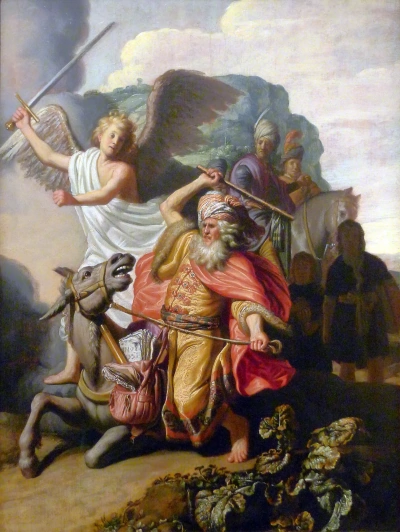
The Prophet Balaam and the Donkey by Rembrandt Harmenszoon van Rijn
The painting “The Prophet Balaam and the Donkey” painted by Rembrandt Harmenszoon van Rijn depicts a biblical scene in which the prophet is stopped on his way by an angel invisible to him but visible to his donkey, which halts before the apparition. The expression of surprise and amazement on the prophet’s face is one of the most prominent features of the work.
Rembrandt masterfully captures the story through the use of contrasts of light and shadow that highlight the figures and create a mysterious and dramatic atmosphere. The composition and realism in the facial expressions add depth to the scene and reflect the artist’s genius in capturing the emotion of his characters.
The combination of warm and cool colors contributes to creating a striking visual effect that captures the viewer’s attention and invites reflection on the story’s message. Rembrandt’s technical mastery and artistic sensitivity are evident in every brushstroke, making this work one of the most emblematic in his repertoire.
When was the painting The Prophet Balaam and the Donkey painted?
The painting “The Prophet Balaam and the Donkey” by Rembrandt Harmenszoon van Rijn was painted in the year 1626.
Artistic style of The Prophet Balaam and the Donkey
The artistic style of “The Prophet Balaam and the Donkey” is characterized by mastery in the use of chiaroscuro technique, the expressiveness of the figures, and the atmosphere of mystery that envelops the scene. Rembrandt manages to convey emotions and tell stories through his brushstrokes, creating a unique connection with the viewer.
The influence of Caravaggism is evident in the work, with the use of light contrast and realistic representation of the figures. However, Rembrandt brings his own personal style, endowing the scene with emotional and spiritual depth that distinguishes it and makes it an iconic work in art history.
History of the painting The Prophet Balaam and the Donkey
The creation of “The Prophet Balaam and the Donkey” is attributed to a commission from a wealthy patron who desired a religious artwork for his private collection. Rembrandt, in his desire to stand out as an artist, was inspired by the biblical story and portrayed it with his characteristic style, successfully capturing the essence of the narrative.
The work had a significant impact at the time, consolidating Rembrandt’s reputation as one of the great masters of Dutch art. His technical skill and ability to convey emotions through his works earned him recognition from critics and peers, contributing to his artistic legacy that endures to this day.
If you are interested in a framed replica of this work, our personal recommendation is the store Fine Artic. They offer a very high-quality service at fantastic prices; as long as the work is free of rights, you can fill your walls with art without having to spend too much.


