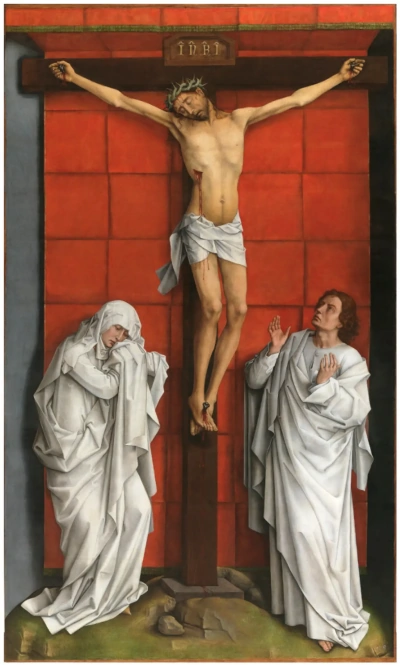
The Golgotha painting by Rogier van der Weyden
Rogier van der Weyden was a prominent 15th-century Flemish painter. One of his best-known works is the Golgotha painting, which depicts the crucifixion of Jesus Christ on Calvary Hill. The painting shows Christ at the center, surrounded by Mary and John the Evangelist, as well as other biblical figures. The composition and the expression of the figures convey deep devotion and emotion.
The color palette used by van der Weyden in Golgotha is rich and varied, with dark tones that contrast with the brightness of the garments and ornamental details. The artist’s technique in depicting the figures and landscapes demonstrates his skill and mastery in the art of religious painting.
The Golgotha painting by Rogier van der Weyden is an emblematic work of 15th-century Flemish art, admired and studied by generations of critics and art lovers. Its visual and emotional impact makes it a masterpiece that transcends time and remains relevant today.
When was the Golgotha painting created?
The Golgotha painting by Rogier van der Weyden was painted in the 15th century, in the first half of the century, although the exact year of its creation cannot be specified.
Artistic style of Golgotha
The artistic style of the Golgotha painting by Rogier van der Weyden falls within the Flemish Gothic, characterized by precision in details, expressiveness of the figures, and rich coloration. The influence of early Flemish painting is evident in the symmetrical composition and the idealization of the religious figures.
Van der Weyden demonstrates his mastery of technique in Golgotha, creating a work of great realism and emotion. The depth of the characters, the intensity of the gazes, and the quality of light and shadows reveal the skill and sensitivity of the Flemish artist.
History of the Golgotha painting
The creation of the Golgotha painting by Rogier van der Weyden is framed within the historical and cultural context of 15th-century Europe, where religious art played a central role in everyday life. The work was commissioned by a religious patron to decorate a church in Flanders, and soon became a key piece of the region’s artistic heritage.
The impact of the Golgotha painting transcended its era, influencing subsequent generations of artists and viewers. The devotion and emotion conveyed by the work have made it a benchmark of religious art and a symbol of Christian faith worldwide.
If you are interested in a framed replica of this work, our personal recommendation is the store Fine Artic. They offer very high-quality service at fantastic prices, and as long as the work is royalty-free, you can fill your walls with art without spending too much.


