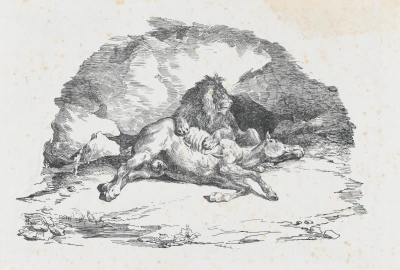
Lion eating a horse painted by Théodore Géricault
The painting Lion eating a horse is a work by the famous French painter Théodore Géricault, in which a wild lion devouring a horse is depicted. This striking image has generated fascination and debate among viewers, who have tried to decipher its meaning over the years.
Géricault manages to capture the ferocity and violence in this scene with impressive mastery and realism. The dark colors and dramatic composition help create an intense and disturbing atmosphere in the work.
This painting, although controversial, has been recognized as one of the most emblematic works of French Romanticism, standing out for its expressiveness and its depiction of the raw force of nature. The painting has been the subject of numerous interpretations throughout art history.
When was the painting Lion eating a horse painted?
The painting Lion eating a horse by Théodore Géricault was painted in the year 1820.
Artistic style of Lion eating a horse
The painting Lion eating a horse by Théodore Géricault shows a clear influence of Romanticism, highlighting its focus on the emotional and passionate. The work is characterized by the portrayal of nature in its wildest state and the exploration of dark and tragic themes.
Géricault manages to create an atmosphere charged with tension and drama through dark colors and dynamic composition. The strength and brutality of the lion devouring the horse become the center of the work, conveying a sense of chaos and imminent violence.
This painting, with its expressionist style and raw depiction of reality, has been considered one of the most striking works of the 19th century, challenging the traditional canons of art of the time.
History of the painting Lion eating a horse
The work Lion eating a horse by Théodore Géricault has been the subject of controversy since its creation, generating debates about its meaning and its impact on the society of the time. Despite initial criticism, the painting has been recognized as one of the most emblematic works of French Romanticism, standing out for its boldness and expressiveness.
Géricault, known for his innovative approach and exploration of controversial themes, challenged the limits of conventional art with this work, which has become an icon of the Romantic movement. The story behind the creation of this painting remains a matter of speculation and mystery, adding a halo of mysticism to the work and its author.
If you are interested in a framed replica of this work, our personal recommendation is the store Fine Artic. They offer a very high-quality service at fantastic prices; as long as the work is free of rights, you can fill your walls with art without having to spend too much.


