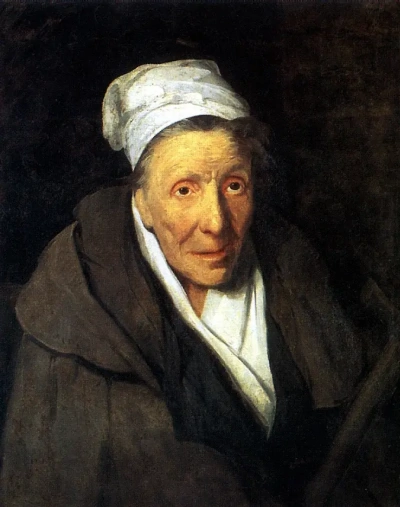
Portrait of a Mad Old Woman painted by Théodore Géricault
El Portrait of a Mad Old Woman is a work by the French painter Théodore Géricault depicting an elderly woman with a crazed and disturbing gaze. The piece stands out for its brutal realism and the intensity of the emotions it conveys.
The elderly woman portrayed in the painting seems to be suffering, with a facial expression that conveys anguish and despair. Géricault manages to capture the fragility and physical and mental deterioration of the woman through his precise and detailed brushwork.
This painting is a clear example of Géricault’s interest in representing human vulnerability and exploring the limits of sanity. The artist’s technical mastery combines with a deep exploration of the human psyche, resulting in a striking and disturbing work.
When was the painting Portrait of a Mad Old Woman painted?
The painting Portrait of a Mad Old Woman by Théodore Géricault was painted in the year 1822, during the Restoration period in France.
Artistic style of Portrait of a Mad Old Woman
El Portrait of a Mad Old Woman by Géricault falls within French Romanticism, characterized by its focus on intense emotions and the exploration of the macabre and mysterious. The work stands out for its raw realism and detailed representation of reality.
Géricault uses a somber color palette and precise technique to portray the anguish and desolation of the elderly woman depicted. The composition of the work, with the central figure standing out in the foreground, helps create a sense of intimacy and closeness with the viewer.
The focus on the human figure and extreme emotions, as well as Géricault’s attention to detail and technical mastery, position Portrait of a Mad Old Woman as an emblematic work of French Romanticism.
History of the painting Portrait of a Mad Old Woman
El Portrait of a Mad Old Woman was a controversial work in its time, as it challenged the aesthetic and moral conventions of 19th-century French society. The raw and realistic representation of madness and human suffering sparked both interest and rejection among critics and viewers.
With his work, Géricault sought to question established norms and explore the limits of artistic representation. The visual and emotional impact of the painting provoked a debate about the relationship between art and madness, and its legacy endures today as a milestone in art history.
If you are interested in a framed replica of this work, our personal recommendation is the store Fine Artic. They offer a very high-quality service at fantastic prices; as long as the work is free of rights, you can fill your walls with art without spending too much.


