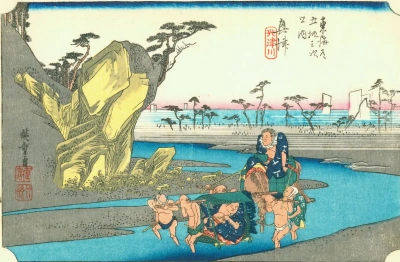
Station 17 – Okitsu by Utagawa Hiroshige
Station 17 – Okitsu is a work by the renowned Japanese artist Utagawa Hiroshige, belonging to the series of prints The Fifty-three Stations of the Tōkaidō. This series shows scenes along the Tōkaidō road, the main route between Edo (now Tokyo) and Kyoto during the Edo period in Japan.
In the painting Station 17 – Okitsu by Utagawa Hiroshige, you can appreciate a calm and peaceful scene on the banks of the Okitsu river. The attention to detail and careful composition are characteristic of Hiroshige’s work, who was known for his landscapes and depictions of daily life.
The soft color palette and masterfully applied technique make Station 17 – Okitsu a unique artwork that reflects the beauty and serenity of Japanese nature in the 19th century.
When was the painting Station 17 – Okitsu painted?
The painting Station 17 – Okitsu by Utagawa Hiroshige was painted in the year 1833 during the Edo period in Japan.
Artistic style of Station 17 – Okitsu
The artistic style of Station 17 – Okitsu is characterized by delicacy in the representation of nature, harmony in composition, and mastery in the application of the ukiyo-e printmaking technique. Hiroshige manages to capture the essence of the scene with elegant simplicity and a deep connection to the depicted landscape.
History of the painting Station 17 – Okitsu
The history of the painting Station 17 – Okitsu by Utagawa Hiroshige is relevant for its contribution to the dissemination of Japanese culture worldwide, as well as its influence on later generations of artists. The work has been widely studied and valued as an artistic treasure that reflects the skill and sensitivity of its creator.
If you are interested in a framed replica of this work, our personal recommendation is the store Fine Artic. They offer a very high-quality service at fantastic prices; as long as the artwork is free of rights, you can fill your walls with art without having to spend too much.


