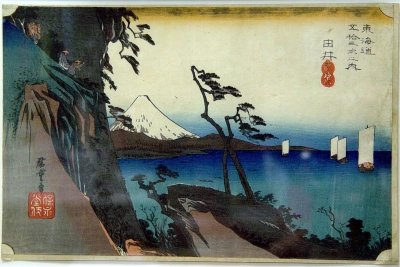
Summit of Mount Satta. Series “53 Stations of the Tokaido”. Station 16 – Yui painted by Utagawa Hiroshige
The painting Summit of Mount Satta. Series “53 Stations of the Tokaido”. Station 16 – Yui is a work by the famous Japanese artist Utagawa Hiroshige that is part of the series depicting the stations of the Tokaido, the route that connected Edo (modern Tokyo) with Kyoto during the Edo period. In this painting, the summit of Mount Satta is shown with a panoramic view of the sea, creating a feeling of peace and serenity.
Hiroshige manages to capture the natural beauty of the landscape with his characteristic ukiyo-e style, using vibrant colors and delicate details to portray the atmosphere and light of the place. The composition of the work and the perspective highlight the vastness of the ocean and the tranquility emanating from the scene.
The representation of station 16, Yui, in Hiroshige’s Tokaido series is a demonstration of the artist’s talent for capturing the essence of places and conveying emotions through his landscapes, becoming an iconic piece in the history of Japanese art.
When was the painting Summit of Mount Satta. Series “53 Stations of the Tokaido”. Station 16 – Yui painted?
The painting Summit of Mount Satta. Series “53 Stations of the Tokaido”. Station 16 – Yui It was painted by Utagawa Hiroshige in the year 1833 during the Edo period in Japan.
Artistic style of Summit of Mount Satta. Series “53 Stations of the Tokaido”. Station 16 – Yui
The artistic style of Summit of Mount Satta. Series “53 Stations of the Tokaido”. Station 16 – Yui reflects the influence of ukiyo-e, a genre of popular painting in Japan during the Edo period. Hiroshige stands out for his skill in representing landscapes with great detail and realism, using colors and compositions that convey a sense of harmony and beauty.
His focus on capturing nature in his works, with special attention to changes in light and atmosphere, makes him one of the masters of landscape art in the history of Japanese art. The use of engraving and hand printing techniques also contributes to the unique and distinctive character of his paintings.
History of the painting Summit of Mount Satta. Series “53 Stations of the Tokaido”. Station 16 – Yui
The history of the painting Summit of Mount Satta. Series “53 Stations of the Tokaido”. Station 16 – Yui by Utagawa Hiroshige is marked by its lasting impact on the history of Japanese art. The work is part of a series that travels the stations of the Tokaido, showing landscapes and scenes of daily life in 19th century Japan.
Hiroshige manages to portray the beauty of nature and convey emotions through his paintings, establishing himself as one of the most influential artists of his time. His unique style and ability to capture the essence of places have made him a benchmark of Japanese art and an inspiration for later generations of artists.
If you are interested in a framed replica of this work, our personal recommendation is the store Fine Artic. They offer a very high-quality service at fantastic prices; as long as the work is free of rights, you can fill your walls with art without having to spend too much.


