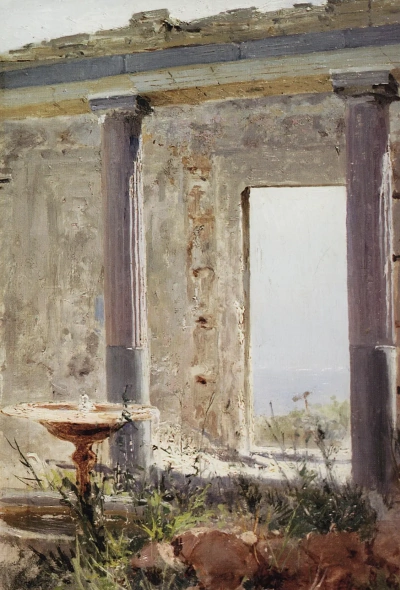
Ruins of a Palace in Palestine by Vasily Dmitrievich Polenov
The painting Ruins of a Palace in Palestine, painted by Vasily Dmitrievich Polenov, depicts a scene of melancholic beauty where the remains of a grand palace can be seen in the midst of a desolate landscape. The combination of soft colors and attention to detail in the architecture create a unique atmosphere in the work.
Polenov’s ability to capture light and shadow in every corner of the painting reveals his mastery of technique. Every brushstroke seems carefully calculated to convey a sense of nostalgia and decay to the viewer, inviting reflection on the fleeting nature of grandeur.
The choice to portray ruins in Palestine evokes a sense of history and mystery that adds depth to Polenov’s work. Through this painting, the artist invites us to contemplate the beauty that can arise even from decay and to reflect on the traces of time in architecture and nature.
When was the painting Ruins of a Palace in Palestine painted?
The painting Ruins of a Palace in Palestine by Vasily Dmitrievich Polenov was painted in the 19th century, in the second half of the century.
Artistic style of Ruins of a Palace in Palestine
The artistic style of Ruins of a Palace in Palestine is characterized by detailed realism and a focus on the precise representation of architectural elements. Polenov demonstrates mastery in handling light and shadow, creating an evocative and melancholic atmosphere in the work.
The choice of soft colors and attention to detail in the depiction of the ruins reflect Polenov’s artistic sensitivity and his ability to convey emotions through painting. The carefully balanced composition and arrangement of elements in the painting demonstrate technical skill and a deep understanding of aesthetics by the artist.
History of the painting Ruins of a Palace in Palestine
The creation of the painting Ruins of a Palace in Palestine by Vasily Dmitrievich Polenov is part of his exploration of historical and landscape themes in his work. Through this painting, the artist sought to convey a sense of nostalgia and beauty in decay, inviting the viewer to reflect on the fleeting nature of grandeur and the permanence of nature.
The impact of Ruins of a Palace in Palestine in the art world was significant, as it demonstrated Polenov’s ability to combine technical precision with deep emotional expressiveness. The work continues to be admired for its timeless beauty and its capacity to evoke a range of emotions in those who view it.
If you are interested in a framed replica of this work, our personal recommendation is the store Fine Artic. They offer a very high quality service at fantastic prices, and as long as the work is free of rights, you can fill your walls with art without having to spend too much.


